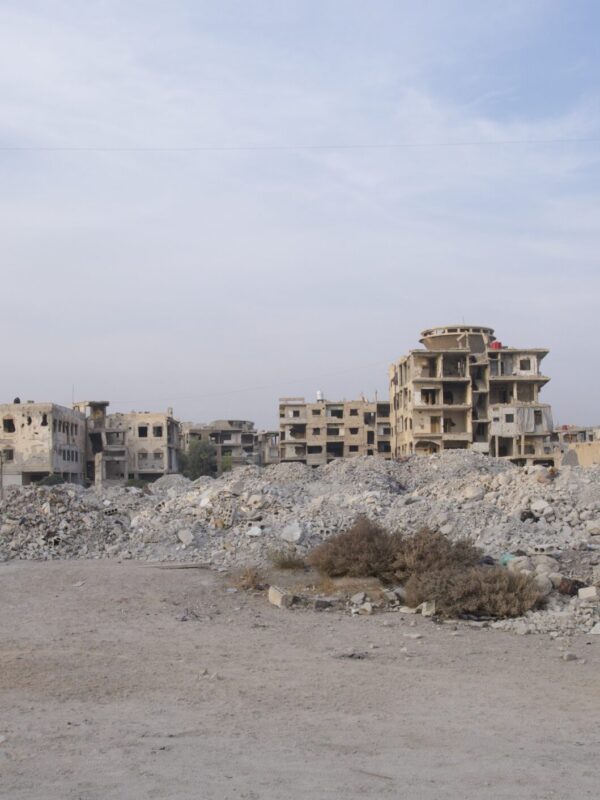
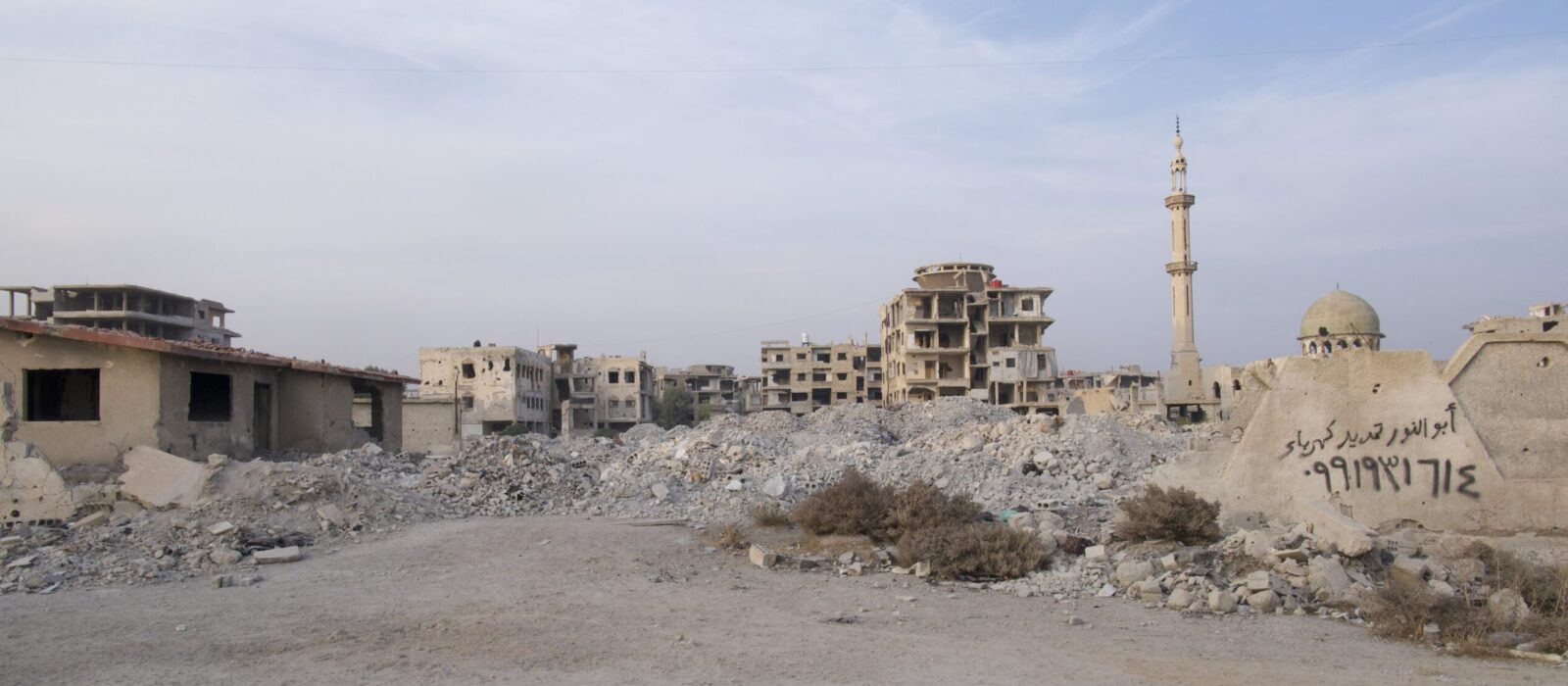
Originating in the 2011 protests and their repression, the Syrian conflict evolved into multiple non-international armed conflicts (NIACs) pitting the government supported by Russian forces and Iranian-aligned militias against non-State armed groups including Islamic State, the Syrian Democratic Forces (SDF) and Hayat Tahrir al Sham (HTS). These conflicts occurred alongside separate operations by United States (US)-led Combined Joint Task Force of the Operation Inherent Resolve (CJTF-OIR), the United States alone, Türkiye, and Israel, and, since December 2025, Jordan, which involved international armed conflicts (IACs), including situations of military occupation. During the reporting period, an offensive led by HTS toppled the Assad government in December 2024 and produced a transitional administration. The HTS government sought to unify armed opposition, reaching a ceasefire agreement with the SDF, which by February 2026 had ended the NIAC between them and folded the SDF into the coalition against Islamic State, but it also confronted residual pro-former government fighters (PFGF) and other militias, while Islamic State attacks resurged. Türkiye kept pressure on the SDF before that conflict too ended in May 2025, Israel expanded strikes and deployments, including an advance into the Golan Heights buffer zone and strikes during violence in Suwayda in July 2025, and the United States continued operations against Islamic State. Syria’s accession to the CJTF-OIR coalition in November 2025 ended the IAC between Syria and CJTF-OIR States on consent grounds, though coalition and US strikes against Islamic State continued even after the United States withdrew its ground forces from Syria by April 2026.
Classifications and Parties to the Conflicts
- International armed conflict between Syria and the CJTF-OIR (ended November 2025)
- International armed conflict between Syria and Israel (Israeli military occupation of the Golan Heights and Mount Hermon and Israeli airstrikes across Syria)
- Turkish military occupation of parts of northern Syria
- International armed conflict between Syria and Jordan (December 2025)
- Non-international armed conflict between Syria and the Syrian Democratic Forces (ended February 2026)
- Non-international armed conflict involving the CJTF-OIR (including Syria since November 2025) and the Syrian Democratic Forces (SDF) (until January 2026) against Islamic State
- Non-international armed conflict between the United States and the Islamic Resistance in Iraq (IRI) (now ended)
- Non-international armed conflict involving Türkiye and the Syrian National Army (SNA) against the Syrian Democratic Forces (SDF) (ended May 2025)
- Non-international armed conflict between Syria and the pro-former government fighters (PFGF)
- Non-international armed conflict between Israel and Hezbollah (ended January 2025)
The armed conflicts in Syria continued to involve significant civilian harm through direct and indiscriminate attacks. These included mass killings in Alawi and Druze communities that the new government failed to prevent. Across multiple armed conflicts, civilians were targeted in populated and rural areas, while mines and improvised explosive devices inflicted daily casualties, including on children. Air and artillery strikes regularly hit homes, markets, schools, hospitals, dams, airports, and cultural and religious sites. The effects were disruption to essential services and large-scale displacement. Persons in the power of parties to conflicts were murdered, tortured, and subjected to sexual violence, arbitrary detention, and enforced disappearance, amid slow and contested transitional justice efforts.
Historical Background
Origins and context
The armed conflicts in Syria originated in the Arab Spring and in the Syrian government’s violent repression of protests that began in March 2011. By at least February 2012, the situation had escalated into armed conflict, which later produced multiple NIACs involving the Syrian government, supported by Russian forces and Iranian-backed militias, and several non-State armed groups, including Islamic State, the Syrian Democratic Forces (SDF) and Hay’at Tahrir al Sham (HTS).
The rise of Islamic State in Syria
The emergence of Islamic State and its territorial expansion from 2013 contributed to parallel IACs, as the United States (US)-led coalition operated in Syria without the government’s consent until November 2025. Coalition operations, together with those of Syrian, Russian, Turkish, and Iranian-backed militias, and SDF operations, contributed to Islamic State’s territorial defeat, although the group continued to launch attacks as of June 2026.
Türkiye’s military presence in northern Syria
Türkiye conducted repeated cross-border operations against the SDF from 2016, in coordination with Syrian opposition forces. These operations established Turkish de facto control over parts of northern Syria. After Assad’s fall, Türkiye maintained a presence and strengthened military cooperation with the new Syrian government, although consent to remain in Syria was lacking.
Israel’s military presence in the Golan Heights
Israel has occupied the Golan Heights since 1967, while Syria continues to oppose Israel’s presence. International bodies consider Israel’s annexation measures legally void. Additionally, Israel has conducted airstrikes in Syria without the Syrian government’s consent, targeting Iranian and Hezbollah positions, as well as Syrian government sites.
Actions of other States within Syria
Since 2020, hostilities have declined following the Türkiye-Russia de-escalation arrangement in Idlib. By mid-2023, territorial control remained divided among the Syrian government and its allies, Turkish forces and affiliated opposition groups, HTS, and the SDF.
Key Developments (2023–2026)
The period between June 2023 and June 2026 saw several major developments:
- The End of the Assad Regime
The fall of Bashar al-Assad’s government in December 2024, after an offensive by HTS and allied factions, dramatically reshaped Syria’s legal landscape. An interim regime led by Ahmed al Sharaa took over governance of the country, working to unify armed groups and signing agreements with the SDF. Nonetheless, clashes with the SDF, remnants loyal to Assad, and Druze militias highlighted ongoing divisions. This shift also weakened Iranian-backed militias, altered Russia’s involvement, ended Iran-Israel hostilities in Syria, and ended the NIACs where HTS was a non-State party.
- Relief from US Sanctions and Revocation of Designation of HTS as a Foreign Terrorist Organization
In 2025, the United States progressively lifted or suspended major Syria-related sanctions, revoked HTS’ foreign terrorist organisation designation, removed Ahmed al Sharaa and Anas Hasan Khattab from its sanctions lists. The United States considered repealing further Syria-related sanctions laws.
- UN Security Council Lifts Sanctions on Ahmed al Sharaa and Anas Hasan Khattab
In November 2025, the Security Council lifted sanctions on Ahmed al Sharaa and Anas Hasan Khattab.
- Potential New Terrorist Threat in Syria
A suicide bombing at a church in Damascus in June 2025 suggested a possible new terrorist threat. Syria blamed Islamic State, but Saraya Ansar al Sunnah, a group that emerged after the fall of Assad and engaged in sectarian violence and attacks against former members of the Assad regime, claimed responsibility.
- Parliamentary Elections
In October 2025, Syria conducted its first parliamentary elections following Assad’s fall, although some regions were excluded because of security concerns and control issues. The election process was indirect, with electoral bodies selecting most of the seats and the president appointing the rest. Hasakah province in the north-east held elections after being reintegrated in the national structures.
- SDF Developments: Ceasefires and Integration into the New Syria
In March 2025, the SDF and the government agreed to integrate forces, institutions, territory, and strategic assets into the Syrian State. Disputes over the form of military integration and repeated clashes delayed implementation. Following further ceasefires in January 2026, integration advanced gradually through a series of territorial handovers, prisoner exchanges, and incorporation of fighters into the Syrian Army.
- Escapes from and Closures of Prisons and Camps Holding Persons Related to Islamic State
After the January 2026 ceasefire, detention sites holding individuals linked to Islamic State came under government control. Escapes occurred during the transition, but most of the escapees were recaptured. Al Hol camp was closed after its remaining population was relocated, and the United States transferred Islamic State detainees to Iraq.
- US Military Withdrawal from Syria
In early 2026, the United States withdrew from its bases in Syria, including al Tanf, al Shaddadi and Qasrak. By April 2026, all US troops and equipment had left Syria, and the former US bases were handed over to the Syrian government.
International Armed Conflicts
Syria vs CJTF-OIR
Between September 2014 and November 2025, Syria was taking part in an IAC against States contributing to the CJTF-OIR because coalition forces conducted operations against Islamic State on Syrian territory without the Syrian government’s consent. The establishment of an interim Syrian government in December 2024 did not alter this assessment since the incoming authorities did not initially express explicit consent to CJTF-OIR activities on Syrian soil. However, in November 2025, the new Syrian government joined the CJTF-OIR and, therefore, consented to the CJTF-OIR activities on its territory. As a result, the IAC between Syria and States contributing to the CJTF-OIR ended in November 2025.
Syria vs Israel
Israel and Syria are currently engaged in two types of international armed conflicts (IACs):
The Israeli occupation of the Golan Heights has existed since Israel seized the territory from Syria in June 1967 and placed it under its authority, later extending Israeli laws, jurisdiction, and administration to the area through domestic legislation. Syria has continuously contested Israel’s presence and demanded withdrawal to pre-1967 borders without reaching a negotiated agreement. After Assad’s fall, Israeli forces advanced into the demilitarized buffer zone and, by 2025, gained control of key strategic areas from Syrian forces. From 2025 to June 2026, Israel continued to occupy parts of southern Syria and indicated that it would remain in control of seized areas indefinitely. The interim Syrian government repeatedly condemned these actions, called for Israeli withdrawal, and reaffirmed its commitment to the 1974 ceasefire arrangements.
The IAC between Syria and Israel remained active after Assad’s fall in December 2024. Israel carried out regular airstrikes across Syria, mainly targeting former regime military sites, logistical routes, military infrastructure, and areas near the occupied Golan Heights. These operations destroyed strategic facilities and were also used to support Druze communities involved in clashes with the new Syrian government. Hostilities escalated again in July 2025 during violence in Suwayda, when Israel struck Syrian government forces and the Ministry of Defence in Damascus before a US-brokered ceasefire was reached. Despite subsequent talks on a new security arrangement, Israel conducted further strikes near Damascus and later launched a ground operation and strikes in Beit Jin. In early 2026, US-mediated talks resumed, but Israel again attacked Syrian military infrastructure in March.
Syria vs Türkiye
The IAC between Syria and Türkiye persists in the form of military occupation in northern Syria. Although Operation Euphrates Shield ended in 2017, Türkiye retained troops, supported local governance and rebel forces, and consolidated control over parts of northern Syria without the Syrian government’s consent. Following the fall of President Assad, Türkiye expanded its military activities through new bases and troop deployments. Relations with the new government shifted, with Türkiye providing intelligence, training, weapons systems and logistical support, and Syria participating in Turkish military exercises. Türkiye also transferred some prisons to the Syrian government. However, Syria has not publicly consented to Türkiye’s military presence or operations, while Türkiye has stated it has no intention of withdrawing. Pending clearer evidence of consent, areas under Türkiye’s effective control remain occupied under IHL.
Syria vs Jordan
Jordan’s airstrikes in southern Syria in December 2025 triggered a short-lived IAC between Syria and Jordan. The strikes targeted drug smuggling networks inside Syrian territory. For the purposes of IHL classification, the motive, intensity, and duration of the attack are irrelevant to the existence of an IAC.
Non-International Armed Conflicts
Syria vs SDF
Following President Assad’s departure, a short-lived NIAC between Syria and the SDF had ended by February 2026. The SDF, initially formed to combat Islamic State and later functioning as the military wing of North and East Syria’s Autonomous Administration, controlled significant territory, detention centres, and local institutions before engaging in talks with the new Syrian government. The required level of violence was met from August 2025 through repeated clashes involving heavy weapons, artillery, drones, casualties, displacement, territorial offensives, and failed ceasefires, with fighting peaking in January 2026 before a final ceasefire on 30 January. The organizational criterion was satisfied by the SDF’s coalition structure, identifiable command, disciplinary bodies, training, territorial control, security roles, external engagement, and unified communications. The conflict ended after a sustained reduction in hostilities and reintegration efforts, leading to the dissolution of the group’s separate organizational structure.
CJTF-OIR and the Syrian Democratic Forces (SDF) vs Islamic State
The NIAC between the CJTF-OIR and Islamic State continued as of June 2026, although the parties have changed. The coalition and the SDF acted as co-belligerents against Islamic State, allowing their violence to be assessed together given the close coordination of operations. Syria joined the coalition in November 2025, meaning the conflict was no longer taking place on Syrian territory without Syrian consent, while the SDF ceased to be a separate party after its integration into the Syrian State from late January 2026. The required level of violence remained met through Islamic State’s continued territorial presence, recurring attacks, and coalition and US strikes, even after the United States withdrew its ground forces from Syria. Islamic State weakened significantly after territorial defeats and leadership losses, decentralizing into smaller cells. However, it retained sufficient fighters and operational continuity to remain an organized armed group under IHL.
Türkiye and Syria National Army (SNA) vs Syria Democratic Forces (SDF)
The NIAC between Türkiye, acting through the SNA as a proxy, and the SDF had ended by May 2025 at the latest. The SNA emerged from former Free Syrian Army factions supported by Türkiye and had engaged the SDF in northern Syria since 2019. The required level of violence was met until April 2025 through repeated clashes, including heavy fighting around strategic sites, and the seizure of territory. After April 2025, however, clashes declined sharply, and no further incidents were reported. The SNA and the SDF both met the organizational criterion during the conflict. The SNA was attributable to Türkiye as a proxy because Türkiye exercised overall control through its military support and general planning. The conflict ended after hostilities ceased and both groups were absorbed into the new Syrian State.
United States vs Islamic Resistance in Iraq (IRI)
The NIAC between the United States and the IRI no longer exists. The IRI emerged in 2023 as an umbrella label for Iran-linked militias acting in response to the situation in Gaza and targeting US forces in Iraq and Syria. Between October 2023 and February 2024, the required level of violence was met through regular rocket and drone attacks against US military positions, a particularly destructive attack near the Syrian border, and US airstrikes against weapons facilities, command centres, logistics sites and training areas. Confrontations declined after February 2024 and, following the change of government in Syria and the withdrawal of Iranian presence there, no further incidents were reported. Iran supported the group, but overall control was not established.
Syria vs pro-former government fighters (PFGF)
The NIAC between Syria and the PFGF arose after the December 2024 change of government. The violence stemmed from the interim government’s efforts to disarm remnants of former security forces, which resisted disarmament and challenged the new authorities. The required level of violence was met in March 2025, when the PFGF carried out coordinated attacks against government forces, captured personnel, besieged villages, and attacked military sites. The government responded with a military operation involving heavy ground and air weapons. The violence also led to massacres of Alawite civilians. Although the groups involved were initially fragmented and not clearly hierarchical, their conduct in March 2025 showed increasing coordination, combined military and intelligence patterns, a significant number of fighters and the ability to claim responsibility through a unified voice. The group was therefore sufficiently organized under IHL, and the situation constituted a NIAC from March 2025.
Israel vs Hezbollah
Hezbollah has maintained an organized military presence in Syria since 2013 in support of the Assad government and has periodically engaged the Israeli armed forces there. From July 2019, a partial redeployment of Hezbollah forces toward the Lebanese border reduced the frequency of clashes on Syrian territory. The situation changed markedly after 8 October 2023, when Hezbollah began regular cross-border attacks against Israel Defense Forces positions along the Lebanon frontier, including strikes within Israeli-occupied areas of Syria. These hostilities persisted throughout the reporting period and involved recurrent exchanges across the border. These incidents constitute a spillover of the ongoing non-international armed conflict between Israel and Hezbollah in Lebanon, rather than a distinct armed conflict. As of January 2025, the situation no longer constitutes an armed conflict.
Parties to the Conflict(s) and Other Main Actors
State Parties
- United States (US)
- Iran
- Israel
- Syria
- Türkiye
- States contributing to the Combined Joint Task Force of Operation Inherent Resolve (CJTF-OIR), including the United Kingdom, Spain, Canada, Australia (at least until December 2024), Germany, the Netherlands, Belgium, and Italy.
Non-State Parties
A wide array of non-State armed groups are active in Syria. Below is a selection of the most important armed groups or alliances:
- Hezbollah (Lebanese)
- Islamic Resistance in Iraq (IRI)
- Islamic State of Iraq and the Levant (Islamic State)
- Syrian Democratic Forces (SDF)
- Syrian National Army (SNA)
- Pro-former government fighters (PFGF)
ATTACKS ON CIVILIANS
The armed conflicts in Syria caused significant civilian harm with direct attacks on civilians and indiscriminate attacks causing continued casualties. There were mass killings in Alawi and Druze communities which the new government did little to suppress and for which it is responsible under international law.
Civilians were directly targeted across several armed conflicts. In the non-international armed conflict where Türkiye backs the Syrian National Army (SNA) against the Syrian Democratic Forces (SDF), airstrikes hit a crowd of civilian protesters near Tishrin Dam without warning, causing deaths and injuries and indicating direct attacks or at least failures of precautions. During hostilities between Syria and Islamic State before December 2024, fighters attacked shepherds in Homs, Deir ez Zor and Raqqa, killing many and destroying their livestock. These attacks are prima facie war crimes. In the context of the international armed conflict between Syria and Israel, security forces fired on unarmed protesters in Maariya and later used drones against residents mobilized to protect water installations in Nawa, causing further civilian casualties.
Attacks in densely populated areas
Airstrikes in densely populated areas caused significant civilian harm. During late 2024 and early 2025, intensified operations by the former Syrian government, supported by Russia, against HTS in Idlib sharply increased casualties, with repeated strikes on markets and residential neighbourhoods that killed and injured many, including women and children. On consecutive days, multiple attacks hit a local market and several residential areas, followed by another strike on a residential district. In the non-international armed conflict between Israel and Hezbollah, Israeli forces conducted numerous strikes in and around Damascus, again resulting in civilian deaths and injuries, including among women and children. Israel claimed these operations targeted weapons transfers and a militia command center, but the assertions could not be verified.
ATTACKS ON CIVILIAN INFRASTRUCTURE
Attacks on civilian infrastructure, notably in densely populated areas, destroyed, caused extensive damage, including to essential services, health facilities, dams, airports and cultural property.
Attacks in densely populated areas
Hostilities in densely populated areas amplify incidental and reverberating effects on civilians and essential services. In the erstwhile non-international armed conflict between HTS and the then Syrian government, documented violations by both sides occurred through air and artillery attacks in urban centres, particularly during the lead-up to the government’s collapse in late 2024. Government airstrikes damaged power infrastructure and disabled water stations, reducing access to clean water for large numbers of civilians. HTS rocket fire struck an educational facility in Aleppo, causing civilian casualties and infrastructure damage. Subsequent pro-government airstrikes hit a marketplace in Idlib, killing and injuring civilians and destroying homes and commercial premises.
VIOLATIONS AGAINST PERSONS IN THE HANDS OF THE ENEMY
People in the power of parties to the conflicts faced widespread violations, including murder, torture, arbitrary detention, sexual violence and enforced disappearances. Children and women were particularly exposed. Property in areas controlled by the parties was looted and destroyed. Serious concerns were documented regarding the treatment of dead and transitional justice during the reporting period.
- Murder
- Torture
- Protection of Children
- Arbitrary Detention
- Enforced Disappearances
- Looting and pillage
- Sexual Violence
- Treatment of the Dead
- Transitional Justice
Within the non-international armed conflict between the interim Syrian government and the PFGF, evidence indicates that both sides murdered civilians. Between 7 and 9 March 2025, coordinated attacks across more than forty coastal locations resulted in up to 1,500 Alawi civilians killed, including children, older persons, and persons with disabilities. Perpetrators included interim government forces, PFGF fighters, and private individuals. Witnesses described identification of Alawi residents, their forced removal from homes, dehumanizing slurs, and lists of names, indicating targeted killings. The interim president condemned the violence and announced an investigation. A subsequent national inquiry reported identifying hundreds of alleged perpetrators from military factions and armed groups linked to the former government and referring names to the Attorney General. IHL, however, requires accountability for all responsible.