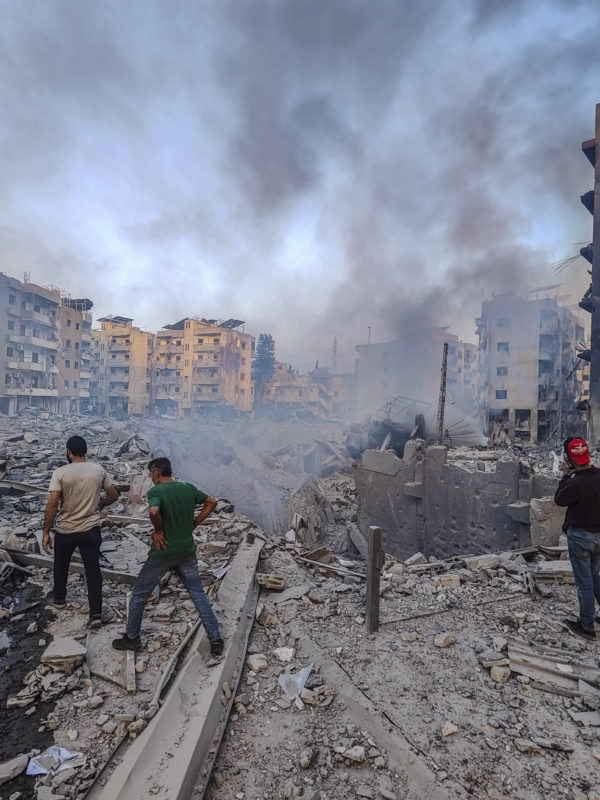
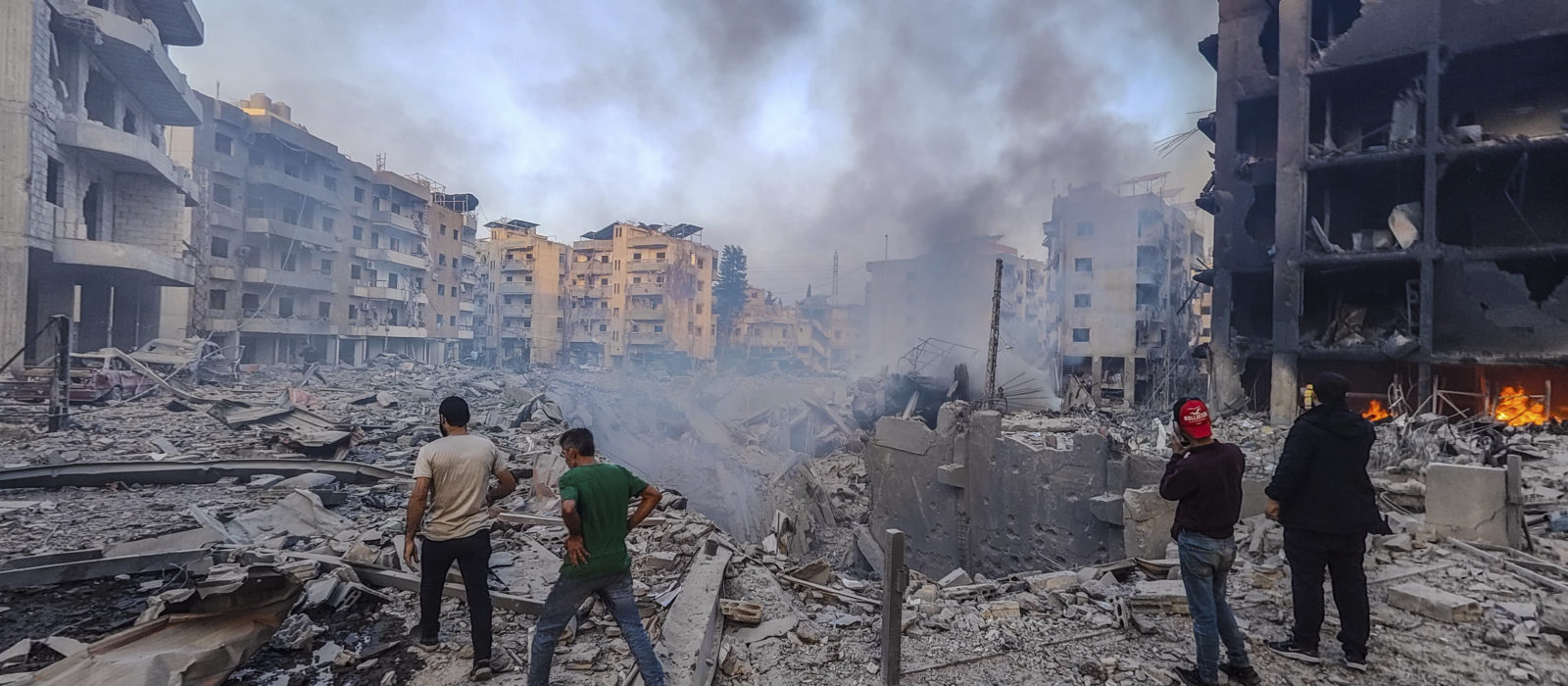
Lebanon has faced recurrent armed conflicts and instability since independence in 1943. Since 1967, the Shebaa Farms have remained under Israeli occupation and, following its intervention in the Lebanese Civil War (1975-1990), Israel also occupied a southern security zone until 2000. In 1978, the United Nations deployed UNIFIL. Hezbollah emerged during the civil war as an Iran-backed political and military actor with strong influence in Lebanon and opposing the Israeli presence. After the 2006 hostilities between Israel and Hezbollah, the latter continued to carry out isolated attacks against Israeli presence in the Shebaa Farms area. Starting from 8 October 2023, following the Israeli military intervention in Gaza, cross border hostilities between Israel and Hezbollah escalated, involving Hezbollah missile attacks, Israeli airstrikes, targeted killings and coordinated pager attacks against senior Hezbollah leaders. On 1 October 2024, Israel launched a ground operation, followed by a ceasefire adopted on 26 November 2024. Since then, Israeli withdrawal has remained incomplete and occasional strikes continue.
Classifications and Parties to the Conflicts
- Israel’s military occupation of Lebanese territory
- International armed conflict between Israel and Lebanon
- Non-international armed conflict between Israel and Hezbollah
Other Actors
- United Nations Force in Lebanon (UNIFIL)
The armed conflicts in Lebanon caused extensive civilian harm, with both Israel and Hezbollah accused of indiscriminate attacks in populated areas. While Hezbollah has used unguided rockets, Israel conducted airstrikes in densely populated areas and employed white phosphorus as well as explosive devices hidden in communication equipment, resulting in high rates of civilian casualties. Journalists, medical personnel, UN peacekeepers and civilians merely associated with a party to the conflict were among the victims. Israeli strikes also repeatedly hit medical facilities, water infrastructure, cultural property and financial institutions which did not qualify as military objectives. The armed conflicts displaced more than 1.2 million people in Lebanon and tens of thousands in Israel.
Historical Background
Initial instability and territorial disputes
Lebanon has experienced repeated armed conflicts and instability since independence in 1943. The Six-Day War of 1967 left the Shebaa Farms (which Israel treats as part of the Golan Heights, while Lebanon claims as Lebanese) under Israeli control. Subsequent purported annexation of the Golan Heights by Israel is without legal effect, and the area has been continuously considered as Israeli-occupied territory. After the withdrawal of Israel from southern Lebanon in 2000, Hezbollah maintained that the withdrawal was incomplete due to Israeli continued presence in the Shebaa Farms.
Lebanese Civil War and foreign interventions
The Lebanese Civil War (which lasted from 1975 to 1990) drew in the country Syria and Israel. Following its intervention in 1978 and again in 1982, Israel maintained an occupation of a southern security zone until 2000. The United Nations Interim Force in Lebanon (UNIFIL) was established in 1978 to monitor hostilities and assist restoration of Lebanese sovereignty in the south, with its mandate evolving over time.
Emergence and profile of Hezbollah
Hezbollah arose during the Lebanese Civil War as a Shiite political-military actor backed by Iran, exercising significant military, political and social influence within Lebanon and opposing Israel and Western influence in the Middle East. It also maintains close ties to a broader network of Iran-aligned non-State armed groups. During the first two decades of its existence, Hezbollah prioritized driving the Israeli Defence Forces (IDF) out of southern Lebanon.
2006 hostilities and legal characterization
The hostilities in July 2006 between Hezbollah and Israel (characterized by attacks be the former and a re-invasion of southern Lebanon by the latter) involved both an international armed conflict and a non-international armed conflict, prompting the adoption of Security Council Resolution 1701. Hezbollah has since carried out isolated attacks against Israeli presence in the Shebaa Farms area.
Regional involvement of Hezbollah
Beyond Lebanon, Hezbollah has played a substantial role in the Syrian civil war supporting the Assad regime and has been implicated in attacks against United States personnel and interests in the region.
Key Developments (2023–2025)
The reporting period saw several major developments:
- 2023: Intensification of cross-border clashes: In September 2023, UNIFIL de-escalated a potential confrontation between Lebanese Armed Forces (LAF) and the IDF near Shebaa Farms. On 8 October 2023, Hezbollah launched missiles on Israeli positions in Shebaa Farms and into Israel ‘in solidarity with Palestinian people’ and, in response, Israel conducted airstrikes into Lebanon against Hezbollah. Thereafter, cross-border hostilities intensified and spread throughout Lebanese territory.
- 2024: Targeted assassinations on high-value targets: Throughout 2024, Israel conducted multiple strikes against senior Hezbollah and Hamas figures across Lebanon, escalating cross-border hostilities and degrading command cadres throughout the year.
- The killing of Hassan Nasrallah and leadership changes: An Israeli strike on 27 September 2024, described as a major decapitation operation, killed Hezbollah’s Secretary General Hassan Nasrallah. Further strikes killed Hezbollah’s media chief in November.
- The pager attacks: On 17-18 September 2024, coordinated detonations of thousands of pagers and radios used by Hezbollah caused dozens of fatalities and thousands of injuries in Lebanon and Syria, including among civilians.
- Israeli ground operation in Lebanon and ceasefire agreement: On 1 October 2024, the IDF launched a ground operation against Hezbollah into southern Lebanon. A ceasefire entailed a halt to hostilities starting 27 November, with Israel ceasing offensive operations, Lebanon preventing Hezbollah attacks, and both sides committing to UNSC Resolution 1701. The IDF withdrew from most positions but retained five sites and the Shebaa Farms, conditioning its full withdrawal on Hezbollah removal from, and LAF control of, southern Lebanon. As of 30 June 2025, withdrawal was incomplete.
- Post-ceasefire: Rocket fire from Lebanon on 22 March 2025 prompted Israeli artillery and air strikes, including on Beirut. Hamas later claimed responsibility for some launches. Israeli strikes continued in the Bekaa Valley, south Lebanon, and Beirut, despite the ceasefire.
- Presidential and municipal elections: Joseph Aoun was elected President of Lebanon on 9 January 2025 and nominated Nawaf Salam as Prime Minister. Municipal elections in May 2025 saw Hezbollah and Amal retain core bases while reformist lists advanced.
- UN peacekeeping: Lebanon requested that UNIFIL’s mandate be renewed until 31 August 2026, reaffirming its commitments under UNSC Resolution 1701.
International Armed Conflict
Israel vs Lebanon
Following Hezbollah’s attack on the Shebaa Farms and missiles launches into Israeli territory since October 2023, Israel conducted repeated airstrikes into Lebanon and, from October 2024, launched a ground operation, alongside intensified strikes in southern Lebanon, the Bekaa Valley and Beirut. Under IHL, an international armed conflict (IAC) is triggered when one or more States resort to armed force against another State; this includes attacks directed at the other State’s territory, and it is not necessary that attacks be directed against the armed forces of that State. A ceasefire agreed on 26 November 2024 required an Israeli withdrawal from Lebanon within sixty days, yet cross-border fire, alleged violations, and Israeli statements on maintaining forces in southern Lebanon demonstrate that the conflict persisted beyond the truce. Rocket launches from Lebanon in March 2025 and subsequent Israeli strikes, including on Beirut, further confirm continuing armed confrontation. Accordingly, IHL governing IACs remains applicable.
Non-International Armed Conflict
Israel vs Hezbollah
Israel has been party to an extraterritorial non-international armed conflict (NIAC) with Hezbollah since 8 October 2023, when Hezbollah launched missiles into Israel and Israel responded with cross-border force. Since then, sustained exchanges of rockets, missiles and drones, targeted strikes and ground incursions into southern Lebanon, alongside repeated air operations in the south, the Bekaa and Beirut, have produced recurring casualties and displacement, meeting the threshold of protracted armed violence under IHL. Hezbollah is sufficiently organized, with centralized leadership through the Shura and Jihad Councils, a hierarchical chain of command, dedicated media and security structures, sizeable combat-experienced forces, and robust logistics and arsenals with external support. Israeli operations have targeted leadership, infrastructure and munitions, yet Hezbollah retains significant operational capacity. A ceasefire effective 27 November 2024 provided for withdrawals and redeployments but did not end the NIAC, and recurrent cross-border fire and stated intentions to maintain positions indicate continuing hostilities.
Key Parties to the conflict
State Parties
- Israel
- Lebanon
Non-State Parties
- Hezbollah
Other Main Actors
- United Nations Interim Force in Lebanon (UNIFIL)
ATTACKS ON CIVILIANS
The armed conflicts in Lebanon caused significant civilian harm. By early July 2025, Israeli operations in Lebanon reportedly killed around 4,000 people, many believed to be civilians, including 250 killed and 600 wounded after the ceasefire. Official figures in Israel reported 47 civilians killed by Hezbollah attacks. Both sides have been accused of indiscriminate attacks, including airstrikes in densely populated areas with unrealistically short evacuation orders and repeated use of inaccurate unguided rockets. Although it was suggested that in some incidents the intended targets were military, numerous children and other civilians were killed or injured as a result.
Attacks against journalists
Numerous casualties among journalists caused by Israeli air and artillery strikes continued to be reported during the period under review, including a particularly deadly attack on a compound housing reporters in Hasbaya. Victims worked for multiple outlets, some of which reportedly aligned with Hezbollah. While the IDF stated on one occasion that they had struck a Hezbollah military structure, independent sources did not find evidence of fighting or military presence in the area at the time of the attack. These incidents raise serious concerns about compliance with the rules on targeting and the specific protection of journalists under customary IHL. Without clear indication of direct participation in hostilities, affiliation with a party’s media outlet does not in itself remove civilian protection.
Attacks against UN peacekeepers
During the period, peacekeepers from the UN Interim Force in Lebanon (UNIFIL), which is not a party to the conflicts, were repeatedly attacked by the IDF and also affected by Hezbollah’s indiscriminate attacks. Most of the incidents occurred in October and November 2024 and included firing on bases, forcible entry into UNIFIL positions, shelling that injured personnel and nearby use of munitions that caused further injuries; additional attacks were reported in May 2025 after the ceasefire. In addition, IDF established positions close to peacekeeping sites despite warnings, and armed group activity near those sites was also reported. Deliberate attacks on peacekeepers violate the principle of distinction and peacekeepers may defend themselves against unlawful attacks without losing protection. Attacks on military objectives located near peacekeeping positions must respect the IHL rules on proportionality and feasible precautions in attack.
ATTACKS ON CIVILIAN INFRASTRUCTURE
Both Hezbollah and Israel regularly attacked civilian objects during the period under review. Hezbollah consistently conducted indiscriminate attacks over populated areas in Israel using highly inaccurate rockets, while Israel attacked medical facilities and ambulances, cultural property as well as financial institutions, all of which are in principle civilian objects protected as such. Moreover, several incidents raise serious concerns under the specific protections afforded to medical facilities and cultural property. In any event, indiscriminate attacks are unlawful.
Attacks against Health Facilities
Repeated attacks by IDF on medical facilities and vehicles in Lebanon, causing deaths and injuries among health workers and patients, were documented. Despite IDF allegations that Hezbollah used ambulances to transport troops and military material, independent reports did not find any evidence that the affected health facilities and transports were used for military purposes. These incidents raise serious concerns under the principle of distinction and might amount to war crimes. Even if nearby military objectives were targeted, principles of proportionality and precaution might have been violated. Medical units and transports, including those of organizations alleged to have links with armed groups, must be respected and protected when assigned exclusively to medical duties, and the wounded and sick must be collected and cared for.