The present armed conflicts between Israel and Palestinian actors stem from the end of the British Mandate, the 1948–49 war and mass displacement, and were reshaped by the 1967 Six Day War, after which Israel occupied the West Bank, including East Jerusalem, and the Gaza Strip. In the West Bank, prolonged belligerent occupation, Oslo-based interim arrangements, and ongoing settlement expansion unfolded alongside measures aimed at annexing East Jerusalem. Between 2023 and 2025, Israeli raids, movement restrictions, and rising settler violence further impacted on the region. Initially under Egyptian control, Gaza was then under Israeli occupation, which continued notwithstanding Israel’s 2005 unilateral disengagement and the 2007 Hamas takeover. It was marked by tightened restrictions and recurrent escalations of hostilities, including intense fighting in 2008, 2012, 2014, and 2021. The 7 October 2023 attacks led to a comprehensive siege, large-scale air and ground operations, an offensive on Rafah, stalled ceasefire initiatives, and renewed Israeli strikes and corridors, before a ceasefire was finally concluded in late 2025.
Classifications and Parties to the Conflicts
- International Armed Conflict between Israel and Palestine, including Military Occupation of Palestine by Israel
- Non-International Armed Conflict between Israel and Hamas
- Non-International Armed Conflict between Israel and the Palestinian Islamic Jihad
Hostilities in Gaza caused massive civilian harm, with civilians accounting for most of the dead and wounded and casualty patterns raising serious concerns about compliance with distinction, proportionality and precautions despite Israeli assertions of advance warnings and efforts to reduce civilian harm. Evidence and testimonies indicate deliberate attacks on civilians, including along evacuation routes, at food distribution points and against medical personnel and journalists, alongside the destruction or damage of most medical facilities and other civilian infrastructure. In the West Bank, intensified raids, airstrikes and movement restrictions resulted in further civilian casualties, damage and displacement. In Gaza, siege measures, damage to food and water systems, large-scale forced displacement, and severe impediments to humanitarian relief breached several IHL provisions, notably the prohibition of starvation as a method of warfare. Hamas and Palestinian Islamic Jihad rocket fire into Israel appeared indiscriminate, and both sides committed abuses against persons in their power, including hostage-taking, torture, arbitrary detention, and sexual and gender-based violence.
Historical Background
The present armed conflicts in Palestine and Israel reflect trajectories that began with the end of the British Mandate in 1948, Israel’s Declaration of Independence, the 1948–49 Arab Israeli War and the mass displacement of Palestinians.
West Bank
After its annexation by Jordan, the West Bank came under Israeli authority in 1967. The 1995 Oslo II Accord divided the territory into areas under Israeli, Palestinian Authority, or joint administration. In the absence of a final agreement, a status quo consolidated, marked by the Second Intifada, construction of the separation wall, and continuing settlement expansion.
East Jerusalem
Retained by Jordan until 1967, East Jerusalem was captured by Israel after the Six-Day War. Israel extended its law, jurisdiction, and administration to the area and, through its 1980 Basic Law as amended in 2000, declared Jerusalem the capital. These measures drew widespread criticism, including in United Nations Security Council resolutions in 1980 and 2016.
Gaza Strip
Assigned in 1947 to a future Arab State, Gaza was occupied by Egypt after the 1948–49 war and by Israel in 1967. Israel’s 2005 unilateral disengagement removed forces and settlements. Following the 2007 Fatah-Hamas split, Hamas took control of Gaza and a series of restrictions were imposed. Hostilities have fluctuated, with intense combat before the current conflicts in 2008, 2012, 2014, and 2021.
Key Developments (2023–2025)
The reporting period saw the following major developments:
- The West Bank (including East Jerusalem): In July–August 2023, Israeli operations expanded across major cities, including a large-scale raid in Jenin. After 7 October 2023, movement restrictions intensified, raids broadened, and settler violence surged. In 2024, repeated incursions culminated in the conduct of ‘Operation Summer Camps’ in the north, alongside record settler-related attacks and further settlement decisions. Early 2025 saw renewed multi-day raids, the first tank deployment to Jenin since 2002, and wide movement limitations during June hostilities with Iran, followed by additional settlement approvals.
- The Gaza Strip: On 7 October 2023, coordinated attacks by Palestinian armed groups triggered a huge Israeli military response, a comprehensive siege, and escalating air and ground operations, briefly paused by a late-November truce. In 2024, fighting resumed, with an Israeli offensive on Rafah, Security Council calls for a ceasefire, and the killing of senior Hamas leaders. In 2025, a three-phase ceasefire began in March but stalled. Israel halted supplies, resumed strikes and ground manoeuvres, created new security corridors, and launched Operation Gideon’s Chariots in May, while negotiations intermittently continued amid renewed displacement orders and air operations. A ceasefire was concluded in October 2025.
International Armed Conflict
Israel vs Palestine
Under IHL, an international armed conflict exists whenever there is a resort to armed force between States. Despite contestation, Palestine has been recognized by the United Nations and bilaterally by numerous States, has acceded to the Geneva Conventions and Additional Protocol I, and joined international organizations. International and domestic authorities addressing IHL have characterized hostilities as an international armed conflict between Israel and Palestine, alongside a non-international armed conflict involving Hamas. Israel continues to occupy considerable parts of Palestine.
Occupation arises where a hostile army establishes effective authority and can exercise it. The International Court of Justice has held the West Bank, including East Jerusalem, is under belligerent occupation, and in 2024 confirmed that Israel’s withdrawal from Gaza did not extinguish obligations where effective control persists, notably via control of borders, movement, taxes, and essential services. Israeli courts acknowledge occupation of the West Bank as the government disputes de jure applicability but applies humanitarian provisions de facto. In the West Bank, settlement expansion, land declarations, planning and enforcement powers, movement restrictions, revenue clearance and repeated IDF operations – including in Areas A and B – demonstrate sustained authority. In Gaza, since October 2023 Israel has re-established military presence over significant areas, created security corridors and enlarged buffer zones, while maintaining decisive control over crossings, electricity and water. These direct and functional modalities of control ground continuing occupation obligations commensurate with the degree of authority actually exercised.
Non-International Armed Conflicts
Israel vs Hamas
Since at least October 2023, hostilities between the Israel Defense Forces and Hamas’s Izz al-Din al-Qassam Brigades amounted to a NIAC. The al-Qassam Brigades display sustained organization through hierarchical command, operational coordination across Gaza, logistical capacity for armament and training, and demonstrated ability to replenish personnel and continue operations despite heavy losses. The scale and duration of hostilities, including sustained exchanges of fire and ground operations, meet the required intensity, and temporary truces did not achieve a peaceful settlement or lasting cessation of armed confrontations. Public positions by the Palestine Liberation Organization distancing from Hamas indicate that the confrontation remains non-international, even as a parallel IAC exists between Israel and Palestine.
Israel vs Palestinian Islamic Jihad
Since October 2023, the Israel Defense Forces and the Palestinian Islamic Jihad’s al-Quds Brigades have engaged in protracted hostilities also amounting to a NIAC. The al-Quds Brigades maintain an organized armed structure with leadership, coordinated regional cells, training capacity, and an established arsenal, as well as continued operational activity and messaging, which together meet the organization requirement. The persistence of armed confrontations, including repeated rocket fire and clashes alongside Israeli air and ground operations, satisfies the intensity requirement, and intermittent ceasefires did not terminate the conflict. This NIAC similarly runs in parallel to the IAC between Israel and Palestine.
Parties to the Conflict
State Party
- Israel
- Palestine
Non-State Parties
- Hamas
- Palestinian Islamic Jihad
ATTACKS ON CIVILIANS
Hostilities in the Gaza Strip resulted in hundreds of thousands of casualties, with many children, women, and older persons killed and injured, prompting characterization of the Gaza Strip as a ‘killing field’. Figures suggested exceptionally high civilian to combatant ratios. Israel denied intentionally targeting civilians and claimed that the Israel Defence Forces (IDF) employed measures to reduce harm, including advance warnings by message, calls and leaflets, and so-called ‘roof knocking’ (using munitions with little or no explosive yield in advance of an attack). Casualty patterns in the densely populated environment cast doubt on the effectiveness of precautions, and the Israeli public claim that civilian and combatant deaths were roughly equal is not credible in light of evidence to the contrary.
- Attacks against Civilians
- Attacks against Medical Personnel
- Sieges and Starvation
- Forced Displacement
- Humanitarian Relief
Evidence from Israeli soldiers and multiple accounts indicates that Israeli forces deliberately targeted Palestinian civilians in Gaza, including through orders to fire at anyone crossing designated lines and strikes on civilians along evacuation routes in supposed safe areas and at food distribution points managed by the Gaza Humanitarian Foundation. Many people killed or injured while seeking aid were not directly participating in hostilities, with young men and boys frequently among the victims. Israeli authorities denied such orders but later acknowledged incidents causing civilian harm, including inaccurate artillery near aid sites. In the West Bank, Israeli operations produced significant civilian casualties, increased airstrikes and large-scale displacement, while Israel said strikes targeted Hamas and Palestinian Islamic Jihad members.
In Gaza, reported patterns and specific incidents raised acute concerns about disproportionate attacks by Israel. Claims indicate that early IDF rules of engagement tolerated very high levels of expected civilian harm, including ratios reportedly reaching twenty civilians per strike and up to one hundred when targeting Hamas leaders, before being tightened in November 2023 (though still remaining looser than pre-7 October practice). Strikes on senior Hamas figures, including Mohammed Deif and Rafa Salama, were associated with exceptionally high incidental harm, with many of those killed reportedly women and children. The 30 June 2025 attack on Al Baqa cafeteria in Gaza City, which the IDF said targeted Hamas operatives caused heavy civilian casualties. In parallel, Hamas and Palestinian Islamic Jihad rocket fire into Israel involved weapons or attacks that appeared indiscriminate.
Attacks against Journalists
More than 220 Palestinian journalists were killed in Gaza during the review period. Media investigations indicated that one third worked for outlets affiliated with Hamas. Israel’s military was reported to have argued that such affiliation equated to membership in Hamas’s armed wing, but publicly denied this and stated that any targeting of Al Aqsa network employees occurred only where individuals were identified as members of Hamas’s military wing or as directly participating in hostilities. Israel accepted responsibility for killing two Al Jazeera journalists, asserting that one was a Hamas operative in the Nukhba Unit who instructed others on documenting operations. Observers disputed the evidentiary basis and pointed to growing indications that journalists were targeted and killed on unsubstantiated terrorism claims.
ATTACKS ON CIVILIAN INFRASTRUCTURE
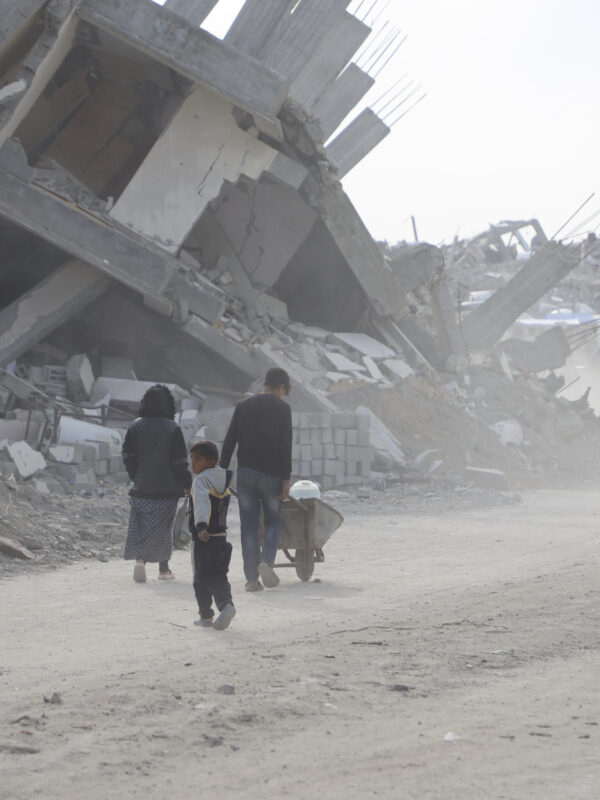
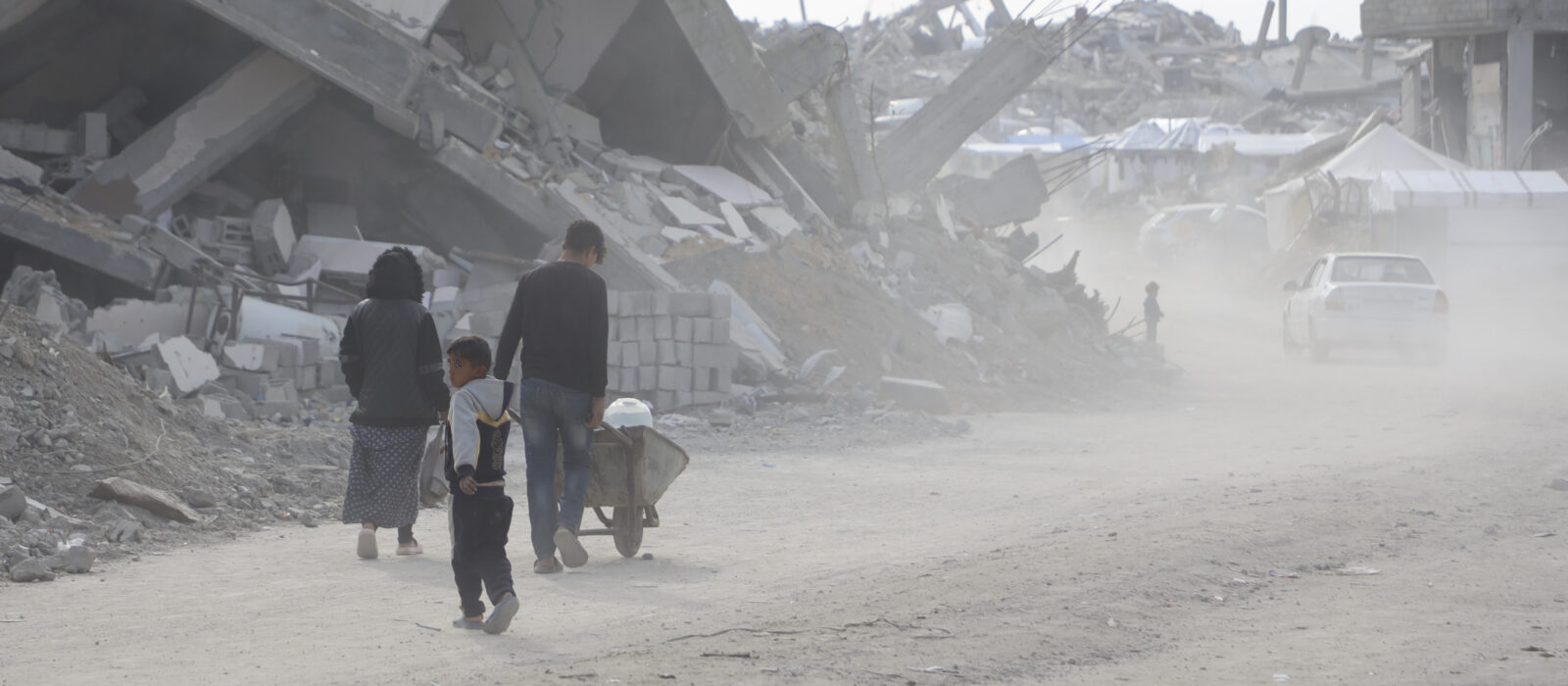
Israeli operations resulted in extensive destruction of civilian facilities across Gaza. Health infrastructure was systematically struck and large portions rendered non-functional, with intensive care capacity severely reduced. Satellite data indicate extensive demolitions of civilian infrastructure in the Netzarim and Philadelphi corridors and within an Israeli buffer zone. Beyond hospitals and clinics, religious and cultural sites and schools and universities were also damaged or destroyed, including through indiscriminate and disproportionate effects. In parallel, Hamas and Palestinian Islamic Jihad launched rockets into Israel that appeared to be indiscriminate weapons or attacks.
The level of physical destruction in Gaza was staggering, with eighty-three per cent of all buildings destroyed as of October 2025. In addition to the massive damage from bombings, the IDF conducted extensive demolitions of civilian infrastructure in the Netzarim and Philadelphi corridors as well as in an Israeli buffer zone in the Gaza Strip, damaging or destroying more than ninety per cent of all structures. In total, 282,000 homes had been destroyed or damaged since October 2023.
VIOLATIONS AGAINST PERSONS IN THE HANDS OF THE ENEMY
Violations against persons in the hands of a party were reported on both sides. Hamas and Palestinian Islamic Jihad were described as holding Israeli hostages abducted on 7 October 2023 and intentionally mistreating them. In Israel, Palestinian detainees were reportedly subjected to arbitrary and incommunicado detention, and widespread ill treatment, with deaths in detention reported. During arrest, evacuations, and detention, Palestinians were regularly subjected to sexual and gender-based violence by the IDF.
In Gaza, Hamas and Palestinian Islamic Jihad were reported to have intentionally mistreated hostages to inflict physical pain and severe mental suffering, through violence, abuse, and sexual assault; forced isolation; deprivation of adequate hygiene, water and food; threats and humiliation; and coercive video recordings aimed at psychologically torturing families. In Israel, Palestinian detainees were reportedly subjected to widespread ill-treatment including physical assaults and beatings, sexual and gender-based violence, deliberate starvation, humiliation, sleep deprivation, denial of adequate medical care, poor hygiene and health conditions, exposure to cold, and other severe abuses, with military-run facilities described as particularly severe. Reports further indicated deaths in detention among Palestinians from Gaza and the West Bank, underscoring the gravity of detention practices. Israel’s own proceedings cited convictions and indictments of IDF personnel for aggravated abuse and serious assaults on Palestinian detainees, confirming the occurrence of grave mistreatment.