Classification
Historical Background
Across India, insurgency has combined Left Wing Extremist violence in the so-called red corridor, conflict with Pakistan over Jammu and Kashmir, and multiple ethnic separatist movements in the North Eastern Region.
The Communist Party of India Maoist (CPI-Maoist)
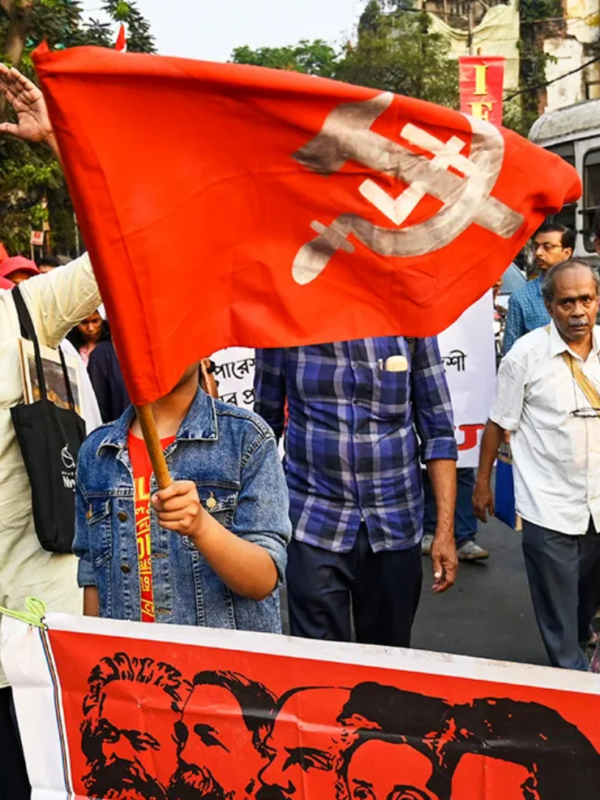
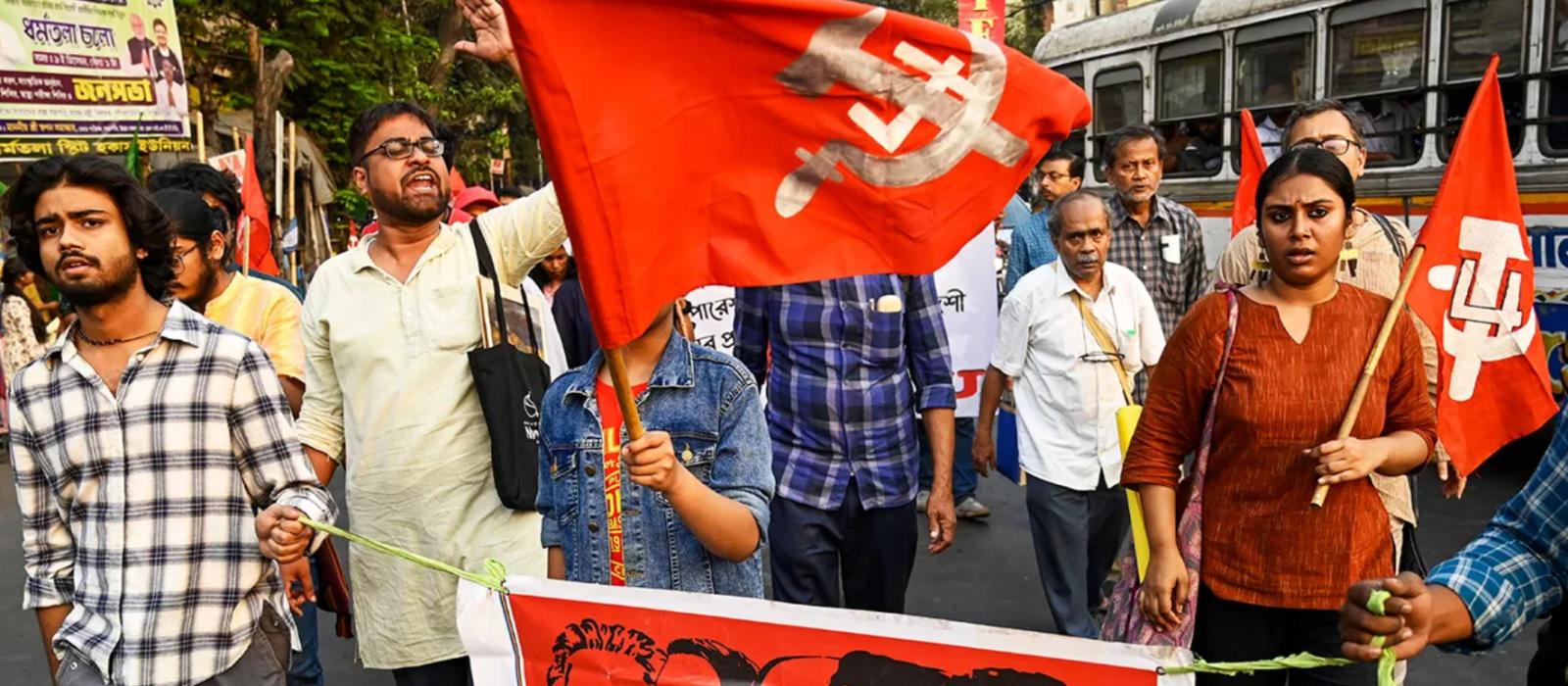
Rooted in the Naxalite movement, the Communist Party of India-Maoist (CPI-Maoist) formed in 2004 and expanded attacks on security forces and strategic infrastructure, alongside kidnapping, within mineral-rich forested areas. Confrontations with the Government of India persisted at sustained levels over decades, causing many fatalities and large-scale displacement. The Indian government institutionalized a Left-Wing Extremist Division, combined security deployments and policing modernization with development initiatives, created Commando Battalion for Resolute Action (CoBRA) units, listed the group under the Unlawful Activities (Prevention) Act 1967, and implemented surrender and reintegration schemes.
Jammu and Kashmir (J&K)
Insurgency emerged in 1988 in a context of India–Pakistan contestation, with Pakistan shifting to support armed groups after earlier wars in 1947 and 1965. Militancy diversified from secessionist Jammu and Kashmir Liberation Front (JKLF) to pro-Pakistan armed groups, notably Hizb-ul Mujahideen, Harkat-ul-Ansar (now known as Harkat-ul-Mujahideen, HuM) and Lashkar-e-Toiba (LeT) and later Jaish-e-Mohammed (JeM), with foreign militants increasing from the mid-1990s. Indian security forces conducted sustained counter-insurgency operations, while Indian authorities pursued elections, economic measures, a State Human Rights Commission, and a unilateral ceasefire in 2000 that militants rejected. Violence and displacement were extensive through the 1990s and early 2000s, later declining markedly.
North Eastern Insurgency
Since the 1950s, the Indian government has confronted multiple insurgencies shaped by ethnicity, migration, and porous borders. In Nagaland, Indian authorities pursued talks, bans, and counter-insurgency operations amid factional splits. In Mizoram, a Memorandum of Understanding with the central government preceded a period of relative stability. In Assam, the Indian government deployed the army, concluded the Assam Accord, and conducted major operations and amnesties amid continued militancy and Bodo conflict. In Manipur, competing Meitei, Naga, and Kuki/Kuki-Zo claims saw the creation of armed groups and periodic reinforcement of Indian security operations.
Key Developments (2023–May 2026)
The reporting period saw several major developments:
- Maoist Insurgency: Within the National Policy and Action Plan to Address Left Wing Extremism, Indian authorities strengthened surrender incentives through updated surrender-cum-rehabilitation guidelines. The central government paired these measures with intensified security operations, established forward operating bases, ruled out talks, and set a 31 March 2026 deadline for surrender. Violence was increasingly concentrated in Chhattisgarh, yet Maoists remained militarily active with continued use of improvised explosive devices (IED), killings of alleged informants, sabotage, abductions, and encounters. Reported fatalities rose markedly in 2024 and 2025. Subsequent security operations dismantled the central command and accelerated surrenders, contributing to the movement’s disintegration by late March 2026.
- Jammu & Kashmir militancy: Insurgent activity was at a relatively low level, with roughly a dozen attacks and several dozen fatalities annually, alongside arrests, surrenders, and arms recoveries by Indian security forces. Lethal incidents nevertheless included attacks on civilians and tourists, and recurrent encounters in which senior commanders were killed.
- North-Eastern Region: Sustained reductions in insurgency incidents and casualties were recorded, supported by agreements with armed groups and the ‘surrender-cum-rehabilitation’ scheme. Residual activity by groups such as the United Liberation Front of Assam-Independent (ULFA-I) and factions of the Nationalist Socialist Council of Nagaland (NSCN) persisted.
- Manipur’s crisis: Violence rooted in the Kuki – Meiteidivide escalated from May 2023. The central government deployed additional troops and imposed a de facto territorial division, yet incursions and fighting continued, with large-scale thefts of arms, fatalities, displacement, and widespread use of explosive devices and heavy weaponry.
Non-International Armed Conflict
India vs the Communist Party of India-Maoist
The conflict opposing India and the Communist Party of India-Maoist (CPI-Maoist) persisted through most of the reporting period, with Indian security forces continuing operations alongside the District Reserve Guard, comprising locals and surrendered Maoists. The CPI-Maoist maintained a hierarchical structure with committees at multiple levels and an armed wing, the People’s Liberation Guerrilla Army (PLGA), and remained capable of planning and executing operations despite reduced territorial control and a narrowing geographical footprint. Violence increased again in 2024 and 2025 after a decline in 2023, while fewer major incidents were recorded in 2026. The conflict ended by the end of March 2026 at the latest, when government pressure dismantled the CPI-Maoist’s central leadership and the group ceased to exist.
Parties to the Conflict(s)
State Parties
- India (until the end of March 2026)
Non-State Parties
- Maoist-CPI (until the end of March 2026)
Other Main Actors
Other Non-State Actors Involved:
- Meiteiarmed groups
- Kuki/Kuki-Zo armed groups
- Northeastern armed groups
- Jammu and Kashmir’s armed groups
Foreign Involvement
- Pakistan
- China
- Bangladesh
- Myanmar