Conflict Overview
Conflict History
For more than a decade, Mali has been engaged in multiple armed conflicts against non-State armed groups operating on its territory. As in other Sahelian countries, the roots of the armed conflicts lie in a combination of ethnic tensions, fragile State institutions, and limited government control over peripheral regions.1M. DeAngelo, ‘Counterterrorism Shortcomings in Mali, Burkina Faso, and Niger’, Foreign Policy Research Institute, 3 March 2025. JNIM, the largest jihadist coalition in Mali, is led by Iyad Ag Ghali, a Tuareg who once served as a Malian diplomat. Ghali previously played a prominent role in the 2012 Tuareg uprising against the government, seeking to establish an independent homeland (‘Azawad’) in the north.2P. Sippy and J. Boswall, ‘How an al-Qaeda offshoot became one of Africa’s deadliest militant groups’, BBC, 7 July 2025.
There have been conflicts with Tuareg separatist armed groups in the north; with an al-Qaeda affiliate, the Group for the Support of Islam and Muslims (Jama’at Nusrat al-Islam wa al-Muslimeen, JNIM); and the Islamic State in the Sahel (ISSP), previously known as Islamic State in the Greater Sahara (ISGS). Other instances of armed violence have involved armed groups that did not amount to armed conflicts, either because the group was not sufficiently organized or, more often, because the violence was not of a sufficiently repeated and intense nature.
Between 2014 and 2015, pro-government armed groups formed the Plateforme des mouvements du 14 juin 2014 d’Alger (Platform), while separatist armed groups established the Coordination des Mouvements de l’Azawad (CMA). The CMA was composed of the Mouvement national pour la liberation de l’Azawad, the Haut conseil pour l’unité de l’Azawad, and the Mouvement arabe de l’Azawad. Platform included the Mouvement pour le salut de l’Azawad, as well as the Groupe d’autodéfense touareg Imghad et allies. In 2015, these two coalitions engaged in peace talks with the Malian government, which led to the conclusion of the Agreement for Peace and Reconciliation in Mali on 20 June 2015.
JNIM was formed in 2017 by the merger of five jihadist organizations operating in the Sahel, including Ansar Dine and Al-Mourabitoun. This coalition emerged after French-led operations in 2012 had temporarily pushed back the separatist and jihadist groups that had seized control of the north of Mali. Since its formation, JNIM has pursued an agenda of rejecting the authority of Sahelian governments while imposing its strict interpretation of Islamic law on populations under its influence.3‘Mali: Enabling Dialogue with the Jihadist Coalition JNIM’, International Crisis Group, 10 December 2021.
Key Events Since 1 July 2024
The early months in the period under review were characterized by large-scale assaults by jihadist and separatist groups against the Malian armed forces (Forces Armées du Mali, FAMa) and the supporting Wagner Group.4Many Wagner Group fighters subsequently integrated into ‘Africa Corps’, which is under direct Russian State control. Major confrontations included the battle of Tinzaouaten in July 2024, and an attack on the national gendarmerie academy and the international airport in Bamako in September 2024.5C. Ewokor and L. Fleming, ‘Mali army admits “significant” losses in Wagner battle’, BBC, 30 July 2024; W. Chibelushi and P. Njie, ‘Al-Qaeda-linked group says it was behind Mali attack’, BBC, 17 September 2024; J.-H. Jezequel, ‘The 17 September Jihadist Attack in Bamako: Has Mali’s Security Strategy Failed?’, International Crisis Group, 24 September 2024. Three non-international armed conflicts (NIACs) continued in Mali, pitting the State against, respectively: JNIM, the ISSP, and the Front de Libération de l’Azawad (FLA). ISSP and JNIM have clashed on several occasions in the Gao region in the north-east, but these were not of sufficient intensity and regularity to amount to a NIAC.
The ISSP was formed in 2015 as an armed group affiliated with Islamic State. Highly organized, the ISSP clashed with FAMa in a few – but significant—instances in 2023 and 2024. There was then a marked increase in hostilities between the two parties in June 2025.6H. Nsaibia, ‘Newly restructured, the Islamic State in the Sahel aims for regional expansion’, ACLED, 30 September 2024; D. Baché, ‘Mali: attaques jihadistes près de Bamako, Mahou et Tessit, frappes de drone de l’armée près de Kidal’, RFI, 5 June 2025. On 4 June, the group launched its first major attack in several months when it attacked Tessit military camp in Gao region, killing ninety-four people (of whom only around forty were soldiers, indicating the remainder were civilians).7‘Africa: Mali’, International Crisis Group.
The FLA was established in November 2024 after the dissolution of the coalition ‘Cadre stratégique pour la défense du peuple de l’Azawad’ (CSP-DPA).8‘Mali: Reorganization of Tuareg armed groups within the Front for the Liberation of Azawad (FLA)’, Intelligence Security Analysis Operations, 11 December 2024. Previously, it was called the Cadre stratégique permanent pour la paix, la sécurité et le développement (CSP-PSD). On 25 July 2024, the CSP had ambushed a military convoy transporting FAMa and Wagner personnel to Tinzaouaten, a commune near the border with Algeria. Three days of fighting saw scores of deaths among the State actors. The FLA is fighting for the independence of Azawad territory in the north of Mali.9International Crisis Group, ‘Africa: Mali’, CrisisWatch, August 2025. Despite several of its leaders being killed shortly after the movement’s creation,10B. Ahmed, ‘Drone strikes by Mali’s military regime kill 8 Tuareg leaders in the country’s north’, Associated Press, 2 December 2024, http://bit.ly/470WpdF. the FLA was able to sustain fighting against FAMa in Kidal region in June 2025.11‘Several killed as separatists clash with Malian army, Russian allies in the conflict-hit north’, Associated Press, 13 June 2025.
Mali, along with Burkina Faso and Niger, its partners in the Alliance of Sahel States (AES), withdrew from the Economic Community of West African States (ECOWAS) in January 2025. In the months that followed, clashes between FAMa and the armed groups (as well as sporadically between the armed groups themselves) continued across the country, with growing numbers of civilian casualties blamed on all parties to the armed conflicts.12C. Ewokor, ‘Three military-run states leave West African bloc – what will change?’, BBC, 29 January 2025.
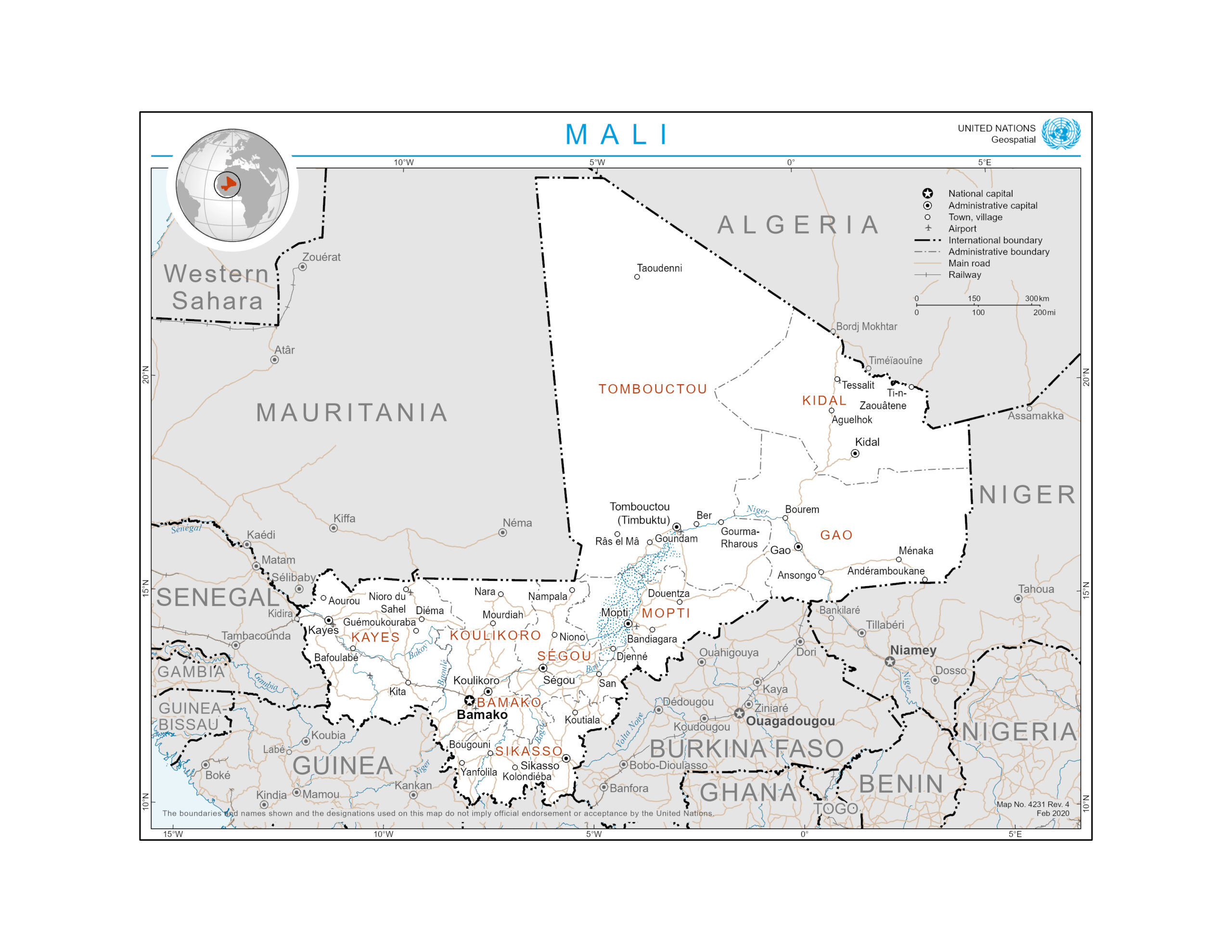
Figure 13.1: UN Map of Mali © United Nations
Conflict Classification and Applicable Law
During the reporting period, three NIACs persisted in Mali:
- Mali (supported by the Wagner Group/Africa Corps) v JNIM.
- Mali (supported by the Wagner Group/Africa Corps) v the ISSP.
- Mali (supported by the Wagner Group/Africa Corps) v the FLA.
Combat between JNIM and FAMa, which has been occurring over the course of several years, intensified in the second half of 2024 and the first half of 2025, with JNIM attacking FAMa at multiple locations across the country, including the capital, Bamako.13‘JNIM Expands Frontlines with a Coordinated Offensive Across Western Mali’, The Soufan Center, 15 July 2025; A. Miridzhanian and M. Aksar, ‘Rise in al Qaeda attacks revives spectre of West African caliphate’, Reuters, 17 July 2025.
As noted, Mali’s armed forces have been supported in the conduct of hostilities by the Wagner Group/Africa Corps. The month of June 2025 marked a violent turning point in Mali’s conflicts, with the Wagner Group formally leaving the country to be replaced by ‘Africa Corps’. Africa Corps is under more direct organizational supervision from the Russian Ministry of Defence14S. Ritter, ‘The New “Africa Corps”: Russia’s Wagner Rebranding’, Energy Intelligence, 24 May 2024. and its members may best be considered as State agents. The deployment of Africa Corps coincided with a sharp escalation of violence on several fronts. Over the course of July 2025, FAMa with Africa Corps launched a series of airstrikes and mounted ground offensives targeting the ISSP, the FLA, and JNIM strongholds in the north and centre of the country.15L. Serwat, J. G. Birru, and A. D. Francisco, ‘Africa Overview: July 2025’, ACLED, 4 July 2025. In December 2025, villagers accused Africa Corps of committing widespread atrocities against civilians. A village chief who fled the Russian forces said: ‘It’s a scorched earth policy. The soldiers speak to no one. Anyone they see, they shoot. No questions, no warning. People don’t even know why they are being killed.’16A. Makoii, ‘Russian forces rape, behead and gouge out civilians’ organs in Mali’, The Daily Telegraph, 7 December 2025.
All three NIACs are governed by Common Article 3 of the Geneva Conventions of 1949 and customary international humanitarian law (IHL). Mali is also a State Party to Additional Protocol II of 1977.17Protocol Additional to the Geneva Conventions of 12 August 1949, and relating to the Protection of Victims of Non-International Armed Conflicts; adopted at Geneva, 8 June 1977; entered into force, 7 December 1978. The NIAC with JNIM meets the additional requirements of Article 1(1) of the Protocol – specifically that group exercised territorial control that would enable it to sustain military operations and implement the Protocol – and this treaty is directly applicable to that armed conflict. By the end of the reporting period, the NIAC with the ISSP had also become governed by the Protocol.
Mali remained a State Party to the Rome Statute of the International Criminal Court throughout the reporting period.18Rome Statute of the International Criminal Court; adopted at Rome, 17 July 1998; entered into force, 1 July 2002 (ICC Statute). Mali ratified the ICC Statute in 2000. Its announced withdrawal from the Court on 22 September 2025 (along with Burkina Faso and Niger)19H. Sekulich, ‘Three West African countries to quit International Criminal Court’, BBC, 23 September 2025. was without legal effect at the time of writing, as it had not made a formal notification of withdrawal to the depositary of the Statute – the Secretary-General of the United Nations (UN). If and when it does so, the withdrawal will take effect one year after the notification. All events covered in this report therefore potentially fall within the material jurisdiction of the Court.
The situation in Mali was referred to the Court by the Malian government in July 2012 and an investigation was opened in January 2013. The current focus of that investigation is alleged war crimes committed in Mali since January 2012, with a regional focus in three northern regions (Gao, Kidal, and Timbuktu), along with certain incidents in Bamako and Sévaré in the south.20ICC, ‘Mali’, accessed 1 December 2025.
On 26 June 2024, Mr Al Hassan Ag Abdoul Aziz, an alleged member of the non-State armed group Ansar Eddine and de facto chief of Islamic police, who was alleged to have been involved in the work of the Islamic court in Timbuktu, was convicted of multiple crimes against humanity and war crimes. The war crimes for which he was convicted were of torture, outrages upon personal dignity, mutilation, cruel treatment, and the passing of sentences without prior fair trial. They were committed between 2 April 2012 and 29 January 2013 in Timbuktu, in the north of the country. On 20 November 2024, Mr Al Hassan was sentenced to ten years’ imprisonment.21ICC, ‘Al Hassan case’, accessed 1 December 2025.
Compliance with IHL
Overview
While many jihadist attacks have been mounted against military objectives in Mali, both non-State armed groups and State actors also attacked civilians and civilian objects during the period under review. There is a clear lack of accountability for unlawful actions of all parties to the armed conflicts, including FAMa and Africa Corps. Although not formalized at the time of writing, Mali’s announced intent to withdraw from the International Criminal Court in September 2025 further undermines the likelihood of improvement in the near term.22O. A. Maunganidze, ‘Unity at Any Cost? AES States Jointly Leave the ICC’, ISS Africa, 3 October 2025.
Civilian Objects Under Attack
JNIM especially has regularly attacked civilian objects in its ongoing conflict with FAMa and the Malian authorities. Under customary IHL, attacks may only be directed against military objectives. Attacks must not be directed against civilian objects.23ICRC, Customary IHL Rule 7: ‘The Principle of Distinction between Civilian Objects and Military Objectives’. Military objectives are those objects which, by their nature, location, purpose or use, make an effective contribution to military action.24ICRC, Customary IHL Rule 8: ‘Definition of Military Objectives’. In addition, the object’s partial or total destruction, capture, or neutralisation must offer a definite military advantage in the prevailing circumstances. Civilian objects are all objects that are not military objectives25ICRC, Customary IHL Rule 9: ‘Definition of Civilian Objects’. and, as such, are protected against attack.
Between June and November 2024, JNIM committed widespread violations of IHL in central Mali in its destruction and seizure of civilian property, including livestock, and its targeting of objects indispensable to the survival of the civilian population. During this period, JNIM fighters burned down more than 1,000 homes and looted thousands of heads of cattle, targeting communities perceived as supporting the Dan Na Ambassagou militia,26Human Rights Watch, ‘Mali: Atrocities by the Army and Wagner Group’, 12 December 2024. an ethnic Dogon militia established in 2016 to defend Dogon communities against attack.27Armed Conflict Location and Event Data project (ACLED), ‘Dan Na Ambassagou’, 9 May 2022. In the village of Tilé alone, more than 500 houses were destroyed and hundreds of animals were stolen (an act of pillage). Witnesses described armed men arriving on motorbikes setting homes ablaze and shooting civilians.28Human Rights Watch, ‘Mali: Atrocities by the Army and Wagner Group’.
Similar tactics by JNIM have been reported in the village of Souleye in Ségou region. Inhabitants described a situation where, for the third consecutive year, agriculture was made impossible due to the risk of attacks by armed groups. With the rainy season approaching, villagers were not able to begin ploughing, raising fears of widespread food insecurity. Souleye has had no functioning school for two years, and access to healthcare has completely collapsed — there is no longer a health centre or access to medicine, leaving the population without any basic services. The destruction of property and loss of livelihoods have left communities in a state of acute vulnerability.29D. Baché, ‘Mali: les habitants de Souleye, dans la région de Ségou, appellent l’Etat à l’aide’, RFI, 28 May 2025.
IHL strictly prohibits pillage and wanton destruction of civilian property during armed conflict in IAC and NIAC. Pillage consists of appropriation by members of armed forces or armed groups of private property and may amount to a war crime.30ICRC, Customary IHL Rule 52: ‘Pillage’; Rule 50: ‘Destruction and Seizure of Property of an Adversary’; and Rule 156: ‘Definition of War Crimes’.
JNIM attacks in Bamako in September 2024
On 17 September 2024, JNIM claimed responsibility for two coordinated attacks in Bamako.31‘UN chief strongly condemns Mali terrorist attack’, UN News, 19 September 2024; UN Security Council, ‘Security Council Press Statement on Terrorist Attacks in Mali’, UN doc SC/15829, 20 September 2024; Jezequel, ‘‘The 17 September Jihadist Attack in Bamako: Has Mali’s Security Strategy Failed?’. The first targeted the Faladié national gendarmerie training school, resulting in heavy casualties among gendarme trainees.32D. Baché, ‘Mali: incertitudes sur le bilan de la double attaque jihadiste de Bamako’, RFI, 18 September 2024; E. Egbejule, ‘Jihadist assault on Mali’s capital killed scores of people, say security sources’, The Guardian, 19 September 2024. Simultaneously, as noted above, JNIM attacked Base Aérienne 101, located within the capital’s Modibo Keïta International Airport.33‘Situation of human rights in Mali – Report of the Independent Expert on the situation of human rights in Mali, Eduardo Gonzalez’, UN Doc A/HRC/58/79, para 13. The assault, which struck the presidential pavilion and destroyed the presidential airplane, also caused material damage to a humanitarian airplane operated by the World Food Programme (WFP). While the attack on the presidential aircraft does not per se breach IHL – insofar as the President of Mali is also commander-in-chief of the armed forces34‘Le Président de la République est le Chef suprême des Forces Armées et de Sécurité. Il préside le Conseil de Sécurité nationale et le Comité de Défense nationale.’ Art 63(1), Décret No 2023-0401/Pt-Rm du 22 Juillet 2023 portant promulgation de la Constitution, Journal Officiel de la République du Mali. – damage to a clearly marked humanitarian plane raises concerns about compliance with the rules of distinction and proportionality in attack (and the underlying duty to take precautions in attack).
Civilians Under Attack
Under customary IHL, civilians enjoy general protection from the effects of hostilities, unless and for such time as they directly participate in hostilities.35ICRC, Customary IHL Rule 6: ‘Civilians’ Loss of Protection from Attack’. Accordingly, parties to armed conflicts must at all times distinguish between soldiers/fighters and civilians, and are prohibited from directing attacks against civilians.36ICRC, Customary IHL Rule 1: ‘The Principle of Distinction between Civilians and Combatants. In case of doubt, persons should be treated as civilians.37ICRC, Customary IHL Rule 6: ‘Civilians’ Loss of Protection from Attack’. The accompanying commentary states that in NIACs, ‘the issue of doubt has hardly been addressed in State practice, even though a clear rule on this subject would be desirable as it would enhance the protection of the civilian population against attack.’ One ‘cannot automatically attack anyone who might appear dubious….’ The same approach with respect to IACs ‘seems justified’ in NIACs. Civilians may be incidentally affected by attacks against lawful targets without the law being violated. Such attacks must, however, not be disproportionate38ICRC, Customary IHL Rule 14: ‘Proportionality in Attack’. and all feasible precautions must be taken to avoid or, in any event, to minimize incidental civilian deaths and injuries to civilians.39ICRC, Customary IHL Rule 15: ‘Principle of Precautions in Attack’.
Attacks directed against civilians
Since July 2024, multiple attacks by parties to the armed conflicts in Mali have involved the killing of civilians – serious violations of customary and treaty IHL.40ICRC, Customary IHL Rule 1: ‘The Principle of Distinction between Civilians and Combatants. On 19 July 2024, the ISSP attacked an internally displaced person (IDP) camp hosting around 200 ethnic Dawsahak on the outskirts of Ménaka town in the east, killing at least seven men. According to witnesses, the attack was targeted retaliation against the Dawsahak, a Tuareg ethnic group that the ISSP accuses of collaborating with JNIM.41Human Rights Watch, ‘Mali: Atrocities by the Army and Wagner Group’, 12 December 2024. Two days later, at least twenty-six people – twenty-two farmers and four members of the Dan Nan Ambassagou militia – were killed in an attack attributed to JNIM in the village of Dembo Songo Anna in central Mali.42‘Situation of human rights in Mali – Report of the Independent Expert on the situation of human rights in Mali, Eduardo Gonzalez’, UN Doc A/HRC/58/79, 6 March 2025, para 49.
On 7 February 2025, a convoy of 19 vehicles transporting more than 100 civilians was ambushed. The convoy was being escorted by FAMa and the Wagner Group. Although military escorts may pose risks to civilians, they do not as such render a civilian convoy a military objective. Even where soldiers may lawfully be targeted, IHL requires that such actions comply with the rule of proportionality in attack and with the duty to take all feasible precautions to minimize civilian harm.
While the attack was not claimed by any party, it was committed in an area where the ISSP is active.43L. Karr, ‘Africa File, November 2024: Salafi-Jihadi Areas of Operation in the Sahel’, Institute for the Study of War, 21 November 2024. Moreover, FAMa and the Wagner Group had conducted a military operation against ISSP earlier in the week on the same road, indicating the possibility the ambush may have been a retaliation by the group.44Human Rights Watch, ‘Mali : L’attaque d’un convoi par des islamistes armés a tué 34 civils’, 20 February 2025. The fact that the armed group opened fire against the convoy as a whole45‘Au moins 32 morts au Mali dans l’attaque d’un grand convoi civil sous escorte’, Ouest-France, 8 February 2025. indicates an indiscriminate attack.
The convoy was travelling between Gao and Ansongo and heading towards a gold mine at N’Tahaka when it was attacked by one hundred or so men on motorbikes.46A. A. Ascofaré, ‘Mali : Ce que l’on sait de l’attaque meurtrière commise dans la région de Gao’, Jeune Afrique, 10 February 2025. Discrepancies exist in the recorded casualty figures, with FAMa reporting the death of twenty-five civilians and thirteen injured.47‘Axe Gao et Ansongo: 25 civils tués et 13 blessés dans une attaque terroriste’, Maliweb.net, 9 February 2025. See also Agence France-Presse, ‘Au Mali, une attaque djihadiste sur un convoi civil fait une trentaine de morts’, Le Monde Afrique, 9 February 2025. According to an investigation by Human Rights Watch, however, the attack caused a total of seventy-eight civilian casualties. Local populations have warned of the risks they face while under military escort.48Human Rights Watch, ‘Mali : L’attaque d’un convoi par des islamistes armés a tué 34 civils’.
Forced displacement
Under IHL, parties to a NIAC are prohibited from ordering displacement of the civilian population in relation to the armed conflict, except to ensure the safety of civilians or for imperative military reasons.49ICRC, Customary IHL 129: ‘The Act of Displacement’. Orders by JNIM to vacate villages have been reported on numerous occasions.50Human Rights Watch, ‘Mali: Atrocities by the Army and Wagner Group’. Notably, on 10 March 2025, an armed group said to be composed of members of JNIM ordered civilians out of the village of Fatakara in Timbuktu.51Association Kal Akal, ‘Rapport de Mars 2025 sur les violations des droits humains dans l’Azawad’, Report No 03/MHB/2025, 1 April 2025. A group of armed men came to the village to pray, but then ordered everyone to leave by 11 am the following morning.52Post on Facebook, 11 March 2025. When they came back and saw that people had not left, they captured and killed the leader of the village and left his body in the middle of the town.53O. Traoré, ‘Horreur à Fatakara – Un chef de famille abattu, tout un village en fuite’, Mali Actu,11 March 2025. As a result, by 13 March 2025, more than 700 families had fled the village and found refuge in Goundam.54‘Mali: un chef terroriste neutralisé près de Ber’, APA News,12 March 2025; ‘Mali/Tombouctou: Goundam accueille de nombreux déplacés de Fatakara’, Sahelien.com,12 March 2025.
No fighting appears to have taken place in the village and no reports have provided information about the reasons for the evacuation order. As such, ordering the displacement of the villagers from Fatakara would amount to a violation of the customary rule prohibiting the forced displacement of the civilian population other than for their safety or for imperative military reasons55ICRC, Customary IHL 129: ‘The Act of Displacement’. – a possible war crime.56ICRC, Customary IHL Rule 156: ‘Definition of War Crimes’.
Use of armed drones
Use of armed drones by parties to the armed conflicts in Mali has increased over the course of this reporting period.57‘Mali: Drone Strikes’, Africa Research Bulletin: Political, Social and Cultural Series, Vol 61, No 8 (August 2024); N. Allen, ‘La prolifération des drones militaires marque un tournant déstabilisateur dans les conflits armés en Afrique’, Centre d’études stratégiques de l’Afrique, 6 May 2025. FAMa have had Bayraktar TB2 drones since 2022 and have acquired at least two Bayraktar Akinci high-altitude, long-endurance drones.58G. Kurtz, W. Lacher and D. M. Tull, ‘The Myth of the Gamechanger: Drones and Military Power in Africa’, Megatrends Afrika, March 2025. The increased use of drones by FAMa is explained in part by its loss of territorial control in Kidal region (to the FLA in particular). FAMa therefore remotely attacks armed groups operating there.59‘Au moins 21 civils tués par un drone dans le nord du Mali, selon un groupe dirigé par des Touaregs’, Qiraat Africa, 26 August 2024.
On several occasions, drones have been used in indiscriminate or disproportionate attacks. For example, on 25 August 2024, FAMa mounted drone strikes in the town of Tinzaouaten in Kidal. FAMa claimed the strike was targeting terrorists and that approximately twenty FLA fighters were killed. However, images and reports have shown that the drones first hit a pharmacy and then civilians who had gathered after the first explosion. Nothing indicates the presence of a military objective in the pharmacy or nearby. Reportedly, the operation resulted in the deaths of twenty-one civilians, including eleven children, with no confirmed casualties among fighters. The twenty-one individuals killed were classified by FAMa as fighters, while local sources identified them as civilians.60‘Au moins 21 civils tués par un drone dans le nord du Mali, selon un groupe dirigé par des Touaregs’, Qiraat Africa; ‘Mali: Drone Strikes’, Africa Research Bulletin: Political, Social and Cultural Series; ‘Nord du Mali: au moins quinze civils tués, dont des enfants, dans des frappes de drone’, Le Monde, 26 August 2024; S. Daniel, ‘Nord du Mali: des questions autour d’une attaque meurtrière de drones à Tinzaouatène’, RFI, 26 August 2025.
On 21 October 2024, the Malian armed forces carried out drone strikes on the weekly market of Inadiatafane (in Timbuktu) on a busy day. At least eight people, including four children, were reportedly killed, and between fourteen and twenty others seriously injured.61D. Baché, ‘Mali: des enfants tués dans des frappes de drone à Inadjatafane, dans la région de Tombouctou’, RFI, 22 October 2024; Amnesty International, ‘Mali: Authorities must investigate deaths of at least eight civilians, including six children, after drone strikes in Inadiatafane’, 5 November 2024 Nothing indicates the presence of a military objective in the market.
On 17 March 2025, the Malian Airforce hit a weekly market in Timbuktu region, fifteen kilometres north of the city of Lerneb. According to the Collective for the Defence of the Rights of the Azawad People, which is linked to separatist Tuareg rebels, the operation killed at least eighteen and injured seven; FAMa again claimed the attack had targeted terrorists.62‘جماعة حقوقية: مقتل 18 في غارة جوية على سوق بشمال ماليالضربات «حيدت» 11 إرهابياً على الأقل’ [‘Un groupe de défense des droits humains affirme que 18 personnes ont été tuées dans une frappe aérienne sur un marché du nord du Mali. Les frappes ont ‘neutralisé’ au moins 11 terroristes’], Asharq al-Awsat, 18 March 2025; ‘Strike on market in north Mali kills 18, civil society group says’, Reuters, 18 March 2025. There is no further information regarding the identity and activities of the persons killed.
Since July 2024, armed groups in Mali also have airstrike capabilities. The FLA, for example, is said to have been using the FDG410 drone63‘Azawad rebels deploy advanced drones in Northern Mali’, Military Africa, 17 February 2025. This is an electric VTOL drone that can fly for 3.5 hours with a 2 kg payload; 2 hours with a 6 kg payload; and 90 minutes with a 10 kg payload. while JNIM is using drones to drop improvised explosive devices (IEDs) on its targets.64Allen, ‘La prolifération des drones militaires marque un tournant déstabilisateur dans les conflits armés en Afrique’.
Use of landmines and other improvised explosive devices
Throughout the reporting period, IEDs continued to pose a grave and persistent threat to civilians across Mali. The types of IED deployed by armed groups range from victim-activated devices amounting to anti-personnel mines or improvised anti-vehicle mines,65Reuters, ‘Mali passenger bus hits landmine killing 14 in central Mopti region’, Africa News, 13 August 2024. to command-detonated and time-delayed munitions.66Situation of human rights in Mali – Report of the Independent Expert on the situation of human rights in Mali, Eduardo Gonzalez’, UN Doc A/HRC/58/79, para 44.
On 5 September 2024, 15 kilometres north of the town of Kidal, a vehicle with civilians aboard struck an IED thought to have been laid by JNIM. Four civilians were killed and three were wounded in the explosion.67ACLED incident ref 1725924066 (accessed 9 May 2025). On 10 November 2024, between Gounguede and Ngai, in Koulikoro region, a cart carrying civilians struck an IED likely planted by JNIM, killing six civilians.68ACLED incident ref 1731979391 (accessed 9 May 2025). On 14 December 2024, a vehicle with civilian passengers struck an IED likely planted by JNIM between Balagina and Diallassagou, in Mopti region. Five women were killed and the driver was seriously injured.69ACLED incident ref 1736845173 (accessed 9 May 2025). On 1 May 2025, an IED likely planted by JNIM at the entrance of the village of Bomboukore in Mopti region detonated, killing three civilians.70ACLED incident ref 1746490625 (accessed 9 May 2025). These incidents raise concern about the risk of indiscriminate effects from use of these weapons. In accordance with the principle of precautions under IHL, all feasible measures must be taken to avoid or at least minimize incidental harm to civilians and civilian objects. Repeated civilian casualties from IED incidents suggest a failure to uphold this obligation.
Mali is a State Party to the 1997 Anti-Personnel Mine Ban Convention, which prohibits its forces from using any anti-personnel mine – defined as an explosive munition placed under, on, or near the ground that is designed or adapted to be activated by a person. This disarmament treaty does not bind non-State armed groups directly under international law, but they remain subject to the customary IHL principles of distinction and proportionality in attack, underpinned by the duty to take feasible precautions to protect civilians. The effects of anti-personnel mines, including those of an improvised nature employed by non-State armed groups, are often indiscriminate.
Mali is obligated by the Anti-Personnel Mine Ban Convention to clear and destroy all anti-personnel mines on its territory as soon as possible, irrespective of who has used them.71Art 5, Convention on the Prohibition of the Use, Stockpiling, Production and Transfer of Anti-Personnel Mines and on their Destruction; adopted at Oslo, 18 September 1997; entered into force, 1 March 1999 (APMBC) Its clearance deadline expired on 1 March 2009 and it had not sought a new deadline at the time of writing, although in June 2025, the government announced its intention to submit a formal request by March 2026.72Statement of Mali, APMBC Intersessional Meetings, Geneva, 17–20 June 2025. Mali is also a State Party to the Convention on Certain Conventional Weapons and its protocols restricting the use of landmines, including anti-vehicle mines (Protocol II of 1980 and Amended Protocol II of 1996).73Protocol on Prohibitions or Restrictions on the Use of Mines, Booby-Traps and Other Devices as amended on 3 May 1996 annexed to the Convention on Prohibitions or Restrictions on the Use of Certain Conventional Weapons which may be deemed to be Excessively Injurious or to have Indiscriminate Effects; adopted at Geneva, 3 May 1996; entered into force, 3 December 1998. The Amended Protocol II applies to all parties to a NIAC, including non-State armed groups.
Protection of Persons in the Power of the Ennemy
Treaty and customary IHL offers fundamental guarantees of protection to anyone in the power of a party to a conflict, prohibiting murder, torture, other inhumane or degrading treatment, all forms of sexual violence, and enforced disappearances. As mentioned, a series of attacks involving the murder of civilians occurred during the reporting period.
Murder of civilians
FAMa, supported by the Wagner Group, are accused of widespread killing of civilians. According to Human Rights Watch, between May and December 2024, they deliberately killed at least 32 civilians during operations in towns and villages in central and northern Mali.74It is, however, unclear whether these civilians were in the power of the enemy at the time they were killed or whether this was part of an attack directed against civilians under Hague Law rules. Incidents were generally reported during counterterrorism operations or were in retaliation for attacks by armed groups on their forces. They often appeared to target victims on the basis of their ethnicity (especially Fulani, who are suspected of having a link with Islamist groups). Non-State armed groups have also committed atrocities, with JNIM and the ISSP thought to have murdered at least 47 civilians from June to December 2024.75Human Rights Watch, ‘Mali: Atrocities by the Army and Wagner Group’.
The killings continued into 2025. Between 2 and 4 January, FAMa accompanied by the Wagner Group allegedly killed six men, three women, and a two-year-old boy in the locality of Fatissouma, near Dioura, in the Mopti region. The bodies of the victims (as well as their burn-out vehicle) were found on 4 January 2025: some were hidden in a hole filled with tree trunks or buried, while some were simply thrown into a well.76Office of the UN High Commissioner for Human Rights (OHCHR), ‘Mali: UN experts outraged by alleged arbitrary executions of at least ten people’, 14 March 2025.
Between 21 and 22 January 2025, during joint operations in the Douentza region of central Mali, the same two actors were accused of executing at least ten civilians across several localities. On 21 January 2025, three Dogon men from the commune of Dinangourou were abducted and later found decapitated. The following day, in the village of Bouldé in the southern Mopti region near the border of Burkina Faso, five Fulani civilians, aged between 14 and 73, were executed and four others wounded by gunfire. Witnesses described early morning raids, with victims killed in their homes, around forty millet granaries set ablaze, and the destruction of several motorbikes. Later the same day, two Dogon and three ethnic Bellah individuals were executed in the village of Niangassadiou. Some victims were identified as fuel sellers, suggesting they may have been targeted for supplying fuel to the ‘enemy’.77D. Baché, ‘Mali: l’armée et le groupe Wagner de nouveau accusés d’exécutions sommaires dans la région de Douentza’, RFI, 25 January 2025.
On 12 April 2025, 100 men, most Fulani, were arrested by FAMa and the Wagner Group in Sebabougou. FAMa confirmed conducting military operations between 11 and 15 April 2025 in several areas, including Sebabougou and Kwala. FAMa said their soldiers were searching for Islamist fighters and had targeted the victims on the basis of their ethnicity, accusing Fulani of being jihadists. Around sixty of the men arrested on 12 April 2025 were taken to Kwala military camp in Koulikoro region where they are said to have been tortured. Afterwards, the Wagner Group were accused of executing the men outside the camp. Between 21 and 22 April 2025, several dozen decomposing bodies, believed to be those who had been arrested in Sebabougou on 12 April 2025, were found around the Kwala military camp by people searching for their relatives.78OHCHR, ‘Mali: UN experts outraged by reports of summary executions and enforced disappearances’, 30 April 2025; Jeune Afrique, ‘Au Mali, des dizaines de civils tués près d’un camp militaire, l’armée et Wagner pointés du doigt’, Jeune Afrique, 24 April 2025; A. Dicko, ‘Ouest du Mali: plusieurs dizaines de corps découverts près du camp militaire de Kwala’, RFI, 23 April 2025.
On 12 May 2025, FAMa allegedly executed at least 22 Fulani men in the village of Diafarabé in Mopti region. Witnesses said soldiers arrested the men at a local market; one escaped and alerted villagers, leading to the discovery of two mass graves containing the victims’ bodies.79Amnesty International, ‘Mali: investigation into executions of civilians in Diafarabé must be conducted urgently’, 22 May 2025.
Non-State armed groups were similarly reported to have conducted multiple summary executions. Intensified acts of violence against civilians have occurred in Gao, Kidal, and Menaka regions by the ISSP, and in Bandiagara, Kayes, Kidal, Mopti, and Tombouctou by JNIM.80‘Situation of human rights in Mali – Report of the Independent Expert on the situation of human rights in Mali, Eduardo Gonzalez’, UN Doc A/HRC/58/79, paras 46–49. On 11 March 2025, for instance, as mentioned above, unidentified armed men, likely belonging to JNIM, went to the village of Fatakara, killed the leader of the village and left his body to rot in the middle of the town.81Traoré, ‘Horreur à Fatakara – Un chef de famille abattu, tout un village en fuite’.
Conflict-related sexual and gender-based violence
Rape and other forms of sexual violence in connection with armed conflict are prohibited and constitute serious violations of IHL and war crimes.82Common Article 3, Geneva Conventions; ICRC, Customary IHL Rule 93: ‘Rape and Other forms of Sexual Violence’; and Rule 156: ‘Definition of War Crimes’. The armed conflicts in Mali have been marked by severe incidents of gender-based violence, with women and girls most often targeted.
Reports indicate that both armed groups83Gender-Based Violence Area of Responsibility (GBVAoR), Protection Cluster and UNFPA, ‘Rapport Trimestriel GBVIMS (Juillet–Septembre 2024)’, 1 January 2025. and State actors84Global Centre for the Responsibility to Protect, ‘Central Sahel: Burkina Faso, Mali and Niger’, Report, 15 July 2025. have perpetrated acts of gender-based and sexual violence. The United Nations have previously found that sexual violence has been used by both Malian armed forces and members of non-State armed groups in the conflict in Mali both as a method of intimidation and also to ‘reward’ fighters.85‘Report of the International Commission of Inquiry for Mali’, UN Doc S/2020/1332, 29 January 2021; Conflict-Related Sexual Violence: Report of the Secretary-General’, UN Doc S/2024/292, 4 April 2024. These acts may even form part of a strategy, particularly in regions controlled by, or in support of, armed groups.86GBVAoR, Protection Cluster, and UNFPA, ‘Rapport Trimestriel GBVIMS (Juillet–Septembre 2024)’, p 3.
Indeed, the number of victims is increasing. Since 1 July 2024, the Gender-Based Violence Information Management System (GBVIMS) used by certain UN agencies and NGOs87The GBVIMS is a standardized tool developed by UNHCR, the United Nations Population Fund (UNFPA), and the International Rescue Committee to support safe, ethical, and co-ordinated data collection and sharing on gender-based violence in humanitarian settings. It helps organisations manage incident data while protecting survivor confidentiality and improving GBV response. registered 15,136 incidents of gender-based violence, of which 3,570 involved cases of sexual violence.88GBVAoR, Protection Cluster, and UNFPA, ‘Rapport Trimestriel GBVIMS (juillet–septembre 2024)’; Gender-Based Violence Area of Responsibility, Protection Cluster & UNFPA, ‘Rapport Trimestriel GBVIMS (octobre–décembre 2024)’, 26 March 2025. The Special Representative of the Secretary-General for Children and Armed Conflict, along with the Independent Expert on the situation of human rights in Mali, have underlined that children have increasingly been victims of violence, including rape, sexual assault, and forced marriage.89UN Special Representative of the Secretary-General for Children and Armed Conflict, ‘Mali: Limited progress for children, grave violations remain high while child protection capacities decrease’, 6 February 2025; ‘Situation of human rights in Mali – Report of the Independent Expert on the situation of human rights in Mali, Eduardo Gonzalez’, UN Doc A/HRC/58/79, para 13.
What is more, the numbers published by the GBVIMS are probably under-reported, due to trauma, social stigma, and fear of reprisals, as well as the lack of adequate services and reporting mechanisms.90GBVAoR, Protection Cluster, and UNFPA, ‘Rapport Trimestriel GBVIMS (octobre–décembre 2024)’, pp 3–4. Moreover, while women form the majority of the victims of sexual and gender-based violence, men are also affected, but are particularly reluctant to come forward.91Ibid. At the same time, the data presented includes both conflict- and non-conflict-related violence. While establishing a direct link between sexual violence and the armed conflict in every case is complex, certain indicators, such as the affiliation of perpetrators to a party to the conflict, and the real or perceived affiliation of victims, provide grounds for establishing such a nexus.
In one example, between 10 to 12 February 2025, FAMa and the Wagner Group undertook a military operation against the JNIM and its perceived supporters in the region of Goundam, Timbuktu. In that context, women in several villages were reportedly tied up, assaulted, and raped by FAMa and Wagner Group combatants.92D. Baché, ‘Mali: une quinzaine de personnes exécutées par l’armée et Wagner dans la région de Tombouctou’, RFI, 13 February 2025; ACLED, Incident ref. MLI33834. As of October 2024, Goundam was a region considered to be supportive of, or even controlled by, JNIM. The data suggest that, in the context of the armed conflict, sexual violence is used by State authorities to punish or deter those perceived as supporting armed groups.93Global Conflict Tracker – Center for Preventive Action, ‘Violent Extremism in the Sahel’, Council on Foreign Relations, 23 October 2024.
Arbitrary deprivation of liberty, enforced disappearance, and hostage-taking
Under IHL, any deprivation of liberty must not be arbitrary and must be conducted with respect for fundamental legal safeguards.94ICRC, Customary IHL Rule 99: ‘Deprivation of Liberty’. Persons in detention must thus be treated humanely at all times, with absolute prohibitions in place on torture or other ill-treatment.95Common Article 3, Geneva Conventions; ICRC, Customary IHL Rule 90: ‘Torture and Cruel, Inhuman or Degrading Treatment’. Authorities must also ensure that detainees have access to medical care and that they are protected against violence. The unlawful killing of a detainee is likely to constitute a war crime.96Common Article 3, Geneva Conventions; ICRC, Customary IHL Rule 89: ‘Violence to Life’. Enforced disappearance, which involves secret detention or the failure to disclose the fate or whereabouts of a detainee, violates IHL’s prohibition of the practice as well as the requirement to register detainees and the right of families to know the fate of their relatives.97ICRC, Customary IHL Rule 98: ‘Enforced Disappearance’; Rule 117: ‘Accounting for Missing Persons’; Rule 123: ‘Recording and Notification of Personal Details of Persons Deprived of their Liberty’; and Rule 125: ‘Correspondence of Persons Deprived of Their Liberty’.
Abductions and detentions have been performed by FAMa, the Wagner Group, and JNIM. The practice of keeping arrested people without providing any information to their relatives, if confirmed, is an enforced disappearance. On 12 May 2025, media alleged that civilian Peul men were arrested by the Malian Army at a market. Their family were left with no information about their whereabouts, until the bodies of the men were found three days later. All the men had been beheaded.98D. Baché, ‘Mali: les hommes arrêtés à Diafarabé ont été exécutés par l’armée’, RFI,16 May 2025.
Unidentified armed men have also abducted civilians,99‘À Bankass, un bus et de nombreux passagers masculins ont disparu’, Studio Tamani,13 March 2025. including children.100‘Panique à Macina, après l’enlèvement de 8 enfants’, Studio Tamani, 28 January 2025. While it has not been possible to attribute the conduct to a specific party to the conflict, the abductions did take place in areas controlled by JNIM. Examples of such events include the abduction of six civilians in the village of Safienso, seemingly in revenge for the arrest of a member of an armed group.101‘Six personnes enlevées dans le village de Safienso à Tominian’, Studio Tamani,4 April 2025. In December 2024, JNIM claimed responsibility for the abduction of Khalif Amadou Hady Tall, demanding he cease his interactions with the Malian government.102‘Mali: le JNIM revendique l’enlèvement du khalife Tijaniyya de Nioro’, Ouestaf,30 December 2024. Abduction of civilians ‘in order to compel a third party to do or to abstain from doing any act as an explicit or implicit condition for his or her release’ amounts to hostage taking,103ICRC, Commentary on the First Geneva Convention – Article 3, 2016, para 647. which is prohibited under customary and treaty IHL and a war crime.104Common Article 3, Geneva Conventions; ICRC, Customary IHL Rule 96: ‘Hostage-Taking’; and Rule 156: ‘Definition of War Crimes’.
Protection of children
Under IHL, children are afforded special protection in armed conflicts, recognizing their particular vulnerability. Children are entitled to general protection as civilians, including against direct attack, arbitrary detention, sexual violence, and ill-treatment, as well as specific guarantees of access to food, medical care, and education.105ICRC, Customary IHL Rule 135: ‘Children’. For 2024, the United Nations identified and verified 892 grave violations against 778 children. The violations were against 612 boys and 161 girls (the sex of the other five was unknown).106‘Children and armed conflict, Report of the Secretary-General’, UN Doc A/79/878-S/2025/247, 17 June 2025, para 130.
IHL explicitly prohibits the recruitment of children under the age of fifteen years or their use in hostilities, whether in State armed forces or non-State armed groups.107ICRC, Customary IHL Rule 136: ‘Recruitment of Child Soldiers’. Violations of the prohibition amount to possible war crimes. Yet the recruitment and use of children in combat, particularly by non-State armed groups, continues to occur. In the course of 2024, the United Nations verified that at least 285 children (264 boys, 21 girls) were recruited and used to participate in hostilities in Mali. Almost all concerned non-State armed groups, principally JNIM (113 children).108Children and armed conflict, Report of the Secretary-General, para 131.
- 1M. DeAngelo, ‘Counterterrorism Shortcomings in Mali, Burkina Faso, and Niger’, Foreign Policy Research Institute, 3 March 2025.
- 2P. Sippy and J. Boswall, ‘How an al-Qaeda offshoot became one of Africa’s deadliest militant groups’, BBC, 7 July 2025.
- 3‘Mali: Enabling Dialogue with the Jihadist Coalition JNIM’, International Crisis Group, 10 December 2021.
- 4Many Wagner Group fighters subsequently integrated into ‘Africa Corps’, which is under direct Russian State control.
- 5C. Ewokor and L. Fleming, ‘Mali army admits “significant” losses in Wagner battle’, BBC, 30 July 2024; W. Chibelushi and P. Njie, ‘Al-Qaeda-linked group says it was behind Mali attack’, BBC, 17 September 2024; J.-H. Jezequel, ‘The 17 September Jihadist Attack in Bamako: Has Mali’s Security Strategy Failed?’, International Crisis Group, 24 September 2024.
- 6H. Nsaibia, ‘Newly restructured, the Islamic State in the Sahel aims for regional expansion’, ACLED, 30 September 2024; D. Baché, ‘Mali: attaques jihadistes près de Bamako, Mahou et Tessit, frappes de drone de l’armée près de Kidal’, RFI, 5 June 2025.
- 7‘Africa: Mali’, International Crisis Group.
- 8‘Mali: Reorganization of Tuareg armed groups within the Front for the Liberation of Azawad (FLA)’, Intelligence Security Analysis Operations, 11 December 2024. Previously, it was called the Cadre stratégique permanent pour la paix, la sécurité et le développement (CSP-PSD).
- 9International Crisis Group, ‘Africa: Mali’, CrisisWatch, August 2025.
- 10B. Ahmed, ‘Drone strikes by Mali’s military regime kill 8 Tuareg leaders in the country’s north’, Associated Press, 2 December 2024, http://bit.ly/470WpdF.
- 11‘Several killed as separatists clash with Malian army, Russian allies in the conflict-hit north’, Associated Press, 13 June 2025.
- 12C. Ewokor, ‘Three military-run states leave West African bloc – what will change?’, BBC, 29 January 2025.
- 13‘JNIM Expands Frontlines with a Coordinated Offensive Across Western Mali’, The Soufan Center, 15 July 2025; A. Miridzhanian and M. Aksar, ‘Rise in al Qaeda attacks revives spectre of West African caliphate’, Reuters, 17 July 2025.
- 14S. Ritter, ‘The New “Africa Corps”: Russia’s Wagner Rebranding’, Energy Intelligence, 24 May 2024.
- 15L. Serwat, J. G. Birru, and A. D. Francisco, ‘Africa Overview: July 2025’, ACLED, 4 July 2025.
- 16A. Makoii, ‘Russian forces rape, behead and gouge out civilians’ organs in Mali’, The Daily Telegraph, 7 December 2025.
- 17Protocol Additional to the Geneva Conventions of 12 August 1949, and relating to the Protection of Victims of Non-International Armed Conflicts; adopted at Geneva, 8 June 1977; entered into force, 7 December 1978.
- 18Rome Statute of the International Criminal Court; adopted at Rome, 17 July 1998; entered into force, 1 July 2002 (ICC Statute). Mali ratified the ICC Statute in 2000.
- 19H. Sekulich, ‘Three West African countries to quit International Criminal Court’, BBC, 23 September 2025.
- 20ICC, ‘Mali’, accessed 1 December 2025.
- 21ICC, ‘Al Hassan case’, accessed 1 December 2025.
- 22O. A. Maunganidze, ‘Unity at Any Cost? AES States Jointly Leave the ICC’, ISS Africa, 3 October 2025.
- 23ICRC, Customary IHL Rule 7: ‘The Principle of Distinction between Civilian Objects and Military Objectives’.
- 24ICRC, Customary IHL Rule 8: ‘Definition of Military Objectives’. In addition, the object’s partial or total destruction, capture, or neutralisation must offer a definite military advantage in the prevailing circumstances.
- 25
- 26Human Rights Watch, ‘Mali: Atrocities by the Army and Wagner Group’, 12 December 2024.
- 27
- 28Human Rights Watch, ‘Mali: Atrocities by the Army and Wagner Group’.
- 29D. Baché, ‘Mali: les habitants de Souleye, dans la région de Ségou, appellent l’Etat à l’aide’, RFI, 28 May 2025.
- 30ICRC, Customary IHL Rule 52: ‘Pillage’; Rule 50: ‘Destruction and Seizure of Property of an Adversary’; and Rule 156: ‘Definition of War Crimes’.
- 31‘UN chief strongly condemns Mali terrorist attack’, UN News, 19 September 2024; UN Security Council, ‘Security Council Press Statement on Terrorist Attacks in Mali’, UN doc SC/15829, 20 September 2024; Jezequel, ‘‘The 17 September Jihadist Attack in Bamako: Has Mali’s Security Strategy Failed?’.
- 32D. Baché, ‘Mali: incertitudes sur le bilan de la double attaque jihadiste de Bamako’, RFI, 18 September 2024; E. Egbejule, ‘Jihadist assault on Mali’s capital killed scores of people, say security sources’, The Guardian, 19 September 2024.
- 33‘Situation of human rights in Mali – Report of the Independent Expert on the situation of human rights in Mali, Eduardo Gonzalez’, UN Doc A/HRC/58/79, para 13.
- 34‘Le Président de la République est le Chef suprême des Forces Armées et de Sécurité. Il préside le Conseil de Sécurité nationale et le Comité de Défense nationale.’ Art 63(1), Décret No 2023-0401/Pt-Rm du 22 Juillet 2023 portant promulgation de la Constitution, Journal Officiel de la République du Mali.
- 35
- 36
- 37ICRC, Customary IHL Rule 6: ‘Civilians’ Loss of Protection from Attack’. The accompanying commentary states that in NIACs, ‘the issue of doubt has hardly been addressed in State practice, even though a clear rule on this subject would be desirable as it would enhance the protection of the civilian population against attack.’ One ‘cannot automatically attack anyone who might appear dubious….’ The same approach with respect to IACs ‘seems justified’ in NIACs.
- 38
- 39
- 40
- 41Human Rights Watch, ‘Mali: Atrocities by the Army and Wagner Group’, 12 December 2024.
- 42‘Situation of human rights in Mali – Report of the Independent Expert on the situation of human rights in Mali, Eduardo Gonzalez’, UN Doc A/HRC/58/79, 6 March 2025, para 49.
- 43L. Karr, ‘Africa File, November 2024: Salafi-Jihadi Areas of Operation in the Sahel’, Institute for the Study of War, 21 November 2024.
- 44Human Rights Watch, ‘Mali : L’attaque d’un convoi par des islamistes armés a tué 34 civils’, 20 February 2025.
- 45‘Au moins 32 morts au Mali dans l’attaque d’un grand convoi civil sous escorte’, Ouest-France, 8 February 2025.
- 46A. A. Ascofaré, ‘Mali : Ce que l’on sait de l’attaque meurtrière commise dans la région de Gao’, Jeune Afrique, 10 February 2025.
- 47‘Axe Gao et Ansongo: 25 civils tués et 13 blessés dans une attaque terroriste’, Maliweb.net, 9 February 2025. See also Agence France-Presse, ‘Au Mali, une attaque djihadiste sur un convoi civil fait une trentaine de morts’, Le Monde Afrique, 9 February 2025.
- 48Human Rights Watch, ‘Mali : L’attaque d’un convoi par des islamistes armés a tué 34 civils’.
- 49
- 50Human Rights Watch, ‘Mali: Atrocities by the Army and Wagner Group’.
- 51Association Kal Akal, ‘Rapport de Mars 2025 sur les violations des droits humains dans l’Azawad’, Report No 03/MHB/2025, 1 April 2025.
- 52Post on Facebook, 11 March 2025.
- 53O. Traoré, ‘Horreur à Fatakara – Un chef de famille abattu, tout un village en fuite’, Mali Actu,11 March 2025.
- 54‘Mali: un chef terroriste neutralisé près de Ber’, APA News,12 March 2025; ‘Mali/Tombouctou: Goundam accueille de nombreux déplacés de Fatakara’, Sahelien.com,12 March 2025.
- 55
- 56
- 57‘Mali: Drone Strikes’, Africa Research Bulletin: Political, Social and Cultural Series, Vol 61, No 8 (August 2024); N. Allen, ‘La prolifération des drones militaires marque un tournant déstabilisateur dans les conflits armés en Afrique’, Centre d’études stratégiques de l’Afrique, 6 May 2025.
- 58G. Kurtz, W. Lacher and D. M. Tull, ‘The Myth of the Gamechanger: Drones and Military Power in Africa’, Megatrends Afrika, March 2025.
- 59‘Au moins 21 civils tués par un drone dans le nord du Mali, selon un groupe dirigé par des Touaregs’, Qiraat Africa, 26 August 2024.
- 60‘Au moins 21 civils tués par un drone dans le nord du Mali, selon un groupe dirigé par des Touaregs’, Qiraat Africa; ‘Mali: Drone Strikes’, Africa Research Bulletin: Political, Social and Cultural Series; ‘Nord du Mali: au moins quinze civils tués, dont des enfants, dans des frappes de drone’, Le Monde, 26 August 2024; S. Daniel, ‘Nord du Mali: des questions autour d’une attaque meurtrière de drones à Tinzaouatène’, RFI, 26 August 2025.
- 61D. Baché, ‘Mali: des enfants tués dans des frappes de drone à Inadjatafane, dans la région de Tombouctou’, RFI, 22 October 2024; Amnesty International, ‘Mali: Authorities must investigate deaths of at least eight civilians, including six children, after drone strikes in Inadiatafane’, 5 November 2024
- 62‘جماعة حقوقية: مقتل 18 في غارة جوية على سوق بشمال ماليالضربات «حيدت» 11 إرهابياً على الأقل’ [‘Un groupe de défense des droits humains affirme que 18 personnes ont été tuées dans une frappe aérienne sur un marché du nord du Mali. Les frappes ont ‘neutralisé’ au moins 11 terroristes’], Asharq al-Awsat, 18 March 2025; ‘Strike on market in north Mali kills 18, civil society group says’, Reuters, 18 March 2025.
- 63‘Azawad rebels deploy advanced drones in Northern Mali’, Military Africa, 17 February 2025. This is an electric VTOL drone that can fly for 3.5 hours with a 2 kg payload; 2 hours with a 6 kg payload; and 90 minutes with a 10 kg payload.
- 64Allen, ‘La prolifération des drones militaires marque un tournant déstabilisateur dans les conflits armés en Afrique’.
- 65Reuters, ‘Mali passenger bus hits landmine killing 14 in central Mopti region’, Africa News, 13 August 2024.
- 66Situation of human rights in Mali – Report of the Independent Expert on the situation of human rights in Mali, Eduardo Gonzalez’, UN Doc A/HRC/58/79, para 44.
- 67ACLED incident ref 1725924066 (accessed 9 May 2025).
- 68ACLED incident ref 1731979391 (accessed 9 May 2025).
- 69ACLED incident ref 1736845173 (accessed 9 May 2025).
- 70ACLED incident ref 1746490625 (accessed 9 May 2025).
- 71Art 5, Convention on the Prohibition of the Use, Stockpiling, Production and Transfer of Anti-Personnel Mines and on their Destruction; adopted at Oslo, 18 September 1997; entered into force, 1 March 1999 (APMBC)
- 72Statement of Mali, APMBC Intersessional Meetings, Geneva, 17–20 June 2025.
- 73Protocol on Prohibitions or Restrictions on the Use of Mines, Booby-Traps and Other Devices as amended on 3 May 1996 annexed to the Convention on Prohibitions or Restrictions on the Use of Certain Conventional Weapons which may be deemed to be Excessively Injurious or to have Indiscriminate Effects; adopted at Geneva, 3 May 1996; entered into force, 3 December 1998.
- 74It is, however, unclear whether these civilians were in the power of the enemy at the time they were killed or whether this was part of an attack directed against civilians under Hague Law rules.
- 75Human Rights Watch, ‘Mali: Atrocities by the Army and Wagner Group’.
- 76Office of the UN High Commissioner for Human Rights (OHCHR), ‘Mali: UN experts outraged by alleged arbitrary executions of at least ten people’, 14 March 2025.
- 77D. Baché, ‘Mali: l’armée et le groupe Wagner de nouveau accusés d’exécutions sommaires dans la région de Douentza’, RFI, 25 January 2025.
- 78OHCHR, ‘Mali: UN experts outraged by reports of summary executions and enforced disappearances’, 30 April 2025; Jeune Afrique, ‘Au Mali, des dizaines de civils tués près d’un camp militaire, l’armée et Wagner pointés du doigt’, Jeune Afrique, 24 April 2025; A. Dicko, ‘Ouest du Mali: plusieurs dizaines de corps découverts près du camp militaire de Kwala’, RFI, 23 April 2025.
- 79Amnesty International, ‘Mali: investigation into executions of civilians in Diafarabé must be conducted urgently’, 22 May 2025.
- 80‘Situation of human rights in Mali – Report of the Independent Expert on the situation of human rights in Mali, Eduardo Gonzalez’, UN Doc A/HRC/58/79, paras 46–49.
- 81Traoré, ‘Horreur à Fatakara – Un chef de famille abattu, tout un village en fuite’.
- 82Common Article 3, Geneva Conventions; ICRC, Customary IHL Rule 93: ‘Rape and Other forms of Sexual Violence’; and Rule 156: ‘Definition of War Crimes’.
- 83Gender-Based Violence Area of Responsibility (GBVAoR), Protection Cluster and UNFPA, ‘Rapport Trimestriel GBVIMS (Juillet–Septembre 2024)’, 1 January 2025.
- 84Global Centre for the Responsibility to Protect, ‘Central Sahel: Burkina Faso, Mali and Niger’, Report, 15 July 2025.
- 85‘Report of the International Commission of Inquiry for Mali’, UN Doc S/2020/1332, 29 January 2021; Conflict-Related Sexual Violence: Report of the Secretary-General’, UN Doc S/2024/292, 4 April 2024.
- 86GBVAoR, Protection Cluster, and UNFPA, ‘Rapport Trimestriel GBVIMS (Juillet–Septembre 2024)’, p 3.
- 87The GBVIMS is a standardized tool developed by UNHCR, the United Nations Population Fund (UNFPA), and the International Rescue Committee to support safe, ethical, and co-ordinated data collection and sharing on gender-based violence in humanitarian settings. It helps organisations manage incident data while protecting survivor confidentiality and improving GBV response.
- 88GBVAoR, Protection Cluster, and UNFPA, ‘Rapport Trimestriel GBVIMS (juillet–septembre 2024)’; Gender-Based Violence Area of Responsibility, Protection Cluster & UNFPA, ‘Rapport Trimestriel GBVIMS (octobre–décembre 2024)’, 26 March 2025.
- 89UN Special Representative of the Secretary-General for Children and Armed Conflict, ‘Mali: Limited progress for children, grave violations remain high while child protection capacities decrease’, 6 February 2025; ‘Situation of human rights in Mali – Report of the Independent Expert on the situation of human rights in Mali, Eduardo Gonzalez’, UN Doc A/HRC/58/79, para 13.
- 90GBVAoR, Protection Cluster, and UNFPA, ‘Rapport Trimestriel GBVIMS (octobre–décembre 2024)’, pp 3–4.
- 91Ibid.
- 92D. Baché, ‘Mali: une quinzaine de personnes exécutées par l’armée et Wagner dans la région de Tombouctou’, RFI, 13 February 2025; ACLED, Incident ref. MLI33834.
- 93Global Conflict Tracker – Center for Preventive Action, ‘Violent Extremism in the Sahel’, Council on Foreign Relations, 23 October 2024.
- 94
- 95Common Article 3, Geneva Conventions; ICRC, Customary IHL Rule 90: ‘Torture and Cruel, Inhuman or Degrading Treatment’.
- 96
- 97ICRC, Customary IHL Rule 98: ‘Enforced Disappearance’; Rule 117: ‘Accounting for Missing Persons’; Rule 123: ‘Recording and Notification of Personal Details of Persons Deprived of their Liberty’; and Rule 125: ‘Correspondence of Persons Deprived of Their Liberty’.
- 98D. Baché, ‘Mali: les hommes arrêtés à Diafarabé ont été exécutés par l’armée’, RFI,16 May 2025.
- 99‘À Bankass, un bus et de nombreux passagers masculins ont disparu’, Studio Tamani,13 March 2025.
- 100‘Panique à Macina, après l’enlèvement de 8 enfants’, Studio Tamani, 28 January 2025.
- 101‘Six personnes enlevées dans le village de Safienso à Tominian’, Studio Tamani,4 April 2025.
- 102‘Mali: le JNIM revendique l’enlèvement du khalife Tijaniyya de Nioro’, Ouestaf,30 December 2024.
- 103ICRC, Commentary on the First Geneva Convention – Article 3, 2016, para 647.
- 104Common Article 3, Geneva Conventions; ICRC, Customary IHL Rule 96: ‘Hostage-Taking’; and Rule 156: ‘Definition of War Crimes’.
- 105
- 106‘Children and armed conflict, Report of the Secretary-General’, UN Doc A/79/878-S/2025/247, 17 June 2025, para 130.
- 107
- 108Children and armed conflict, Report of the Secretary-General, para 131.