Historical Background
Origins and context
Cyprus became independent in 1960 under a constitution providing for power-sharing between the Greek Cypriot majority and Turkish Cypriot minority, but intercommunal violence led to the establishment of United Nations (UN) Peacekeeping Force in Cyprus (UNFICYP) in 1964. A Greece-backed coup in July 1974 overthrew the Cypriot government and prompted Türkiye to intervene militarily, followed by a second offensive that left Türkiye controlling about 36 per cent of the island. The hostilities generated large-scale displacement of both communities, and the UNFICYP has since monitored the buffer zone.
Türkiye’s military presence and the TRNC’s status
Since Türkiye’s 1974 invasion, it has maintained forces north of the Green Line and established the self-declared Turkish Republic of Northern Cyprus (TRNC) in 1983. The TRNC is not recognized internationally, and the UN Security Council deemed its declaration of independence invalid and called on States not to recognize it. Notwithstanding the non-recognition, the TRNC has obtained observer status in the Organization of Islamic Cooperation (OIC) and the Economic Cooperation Organization (ECO), and the Turkish Cypriot community is represented in the Parliamentary Assembly of the Council of Europe by two elected representatives.
Stalemate of reunification efforts
The 2004 Annan Plan, an UN-backed reunification proposal put to simultaneous referenda on both sides of the island, failed after Turkish Cypriot approval and Greek Cypriot rejection, deepening mistrust. Subsequent UN efforts, including initiatives in 2017 and 2019 and confidence-building measures, did not reach a settlement. Following the 2020 election of a Turkish Cypriot leader favouring a two-state approach, UN-sponsored negotiation efforts continued but stalled from late 2021.
Key Developments (2023–2026)
The reporting period saw several major developments:
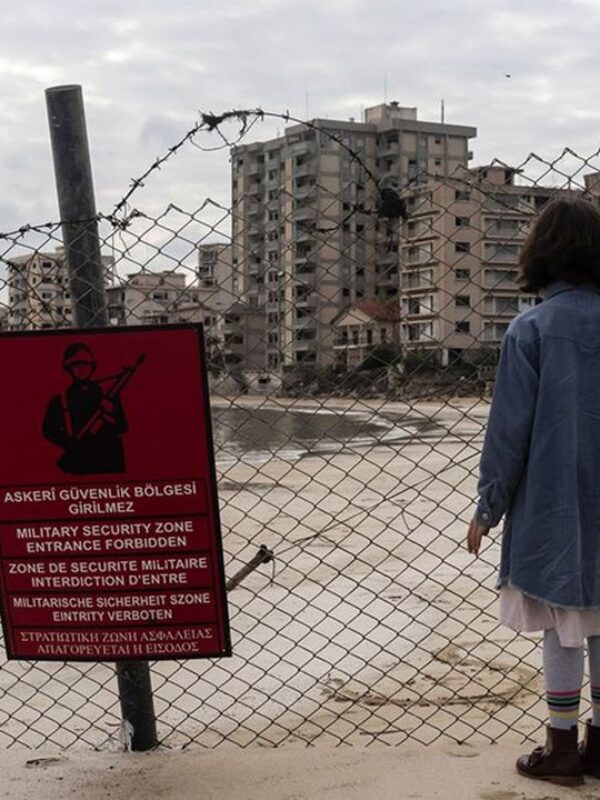
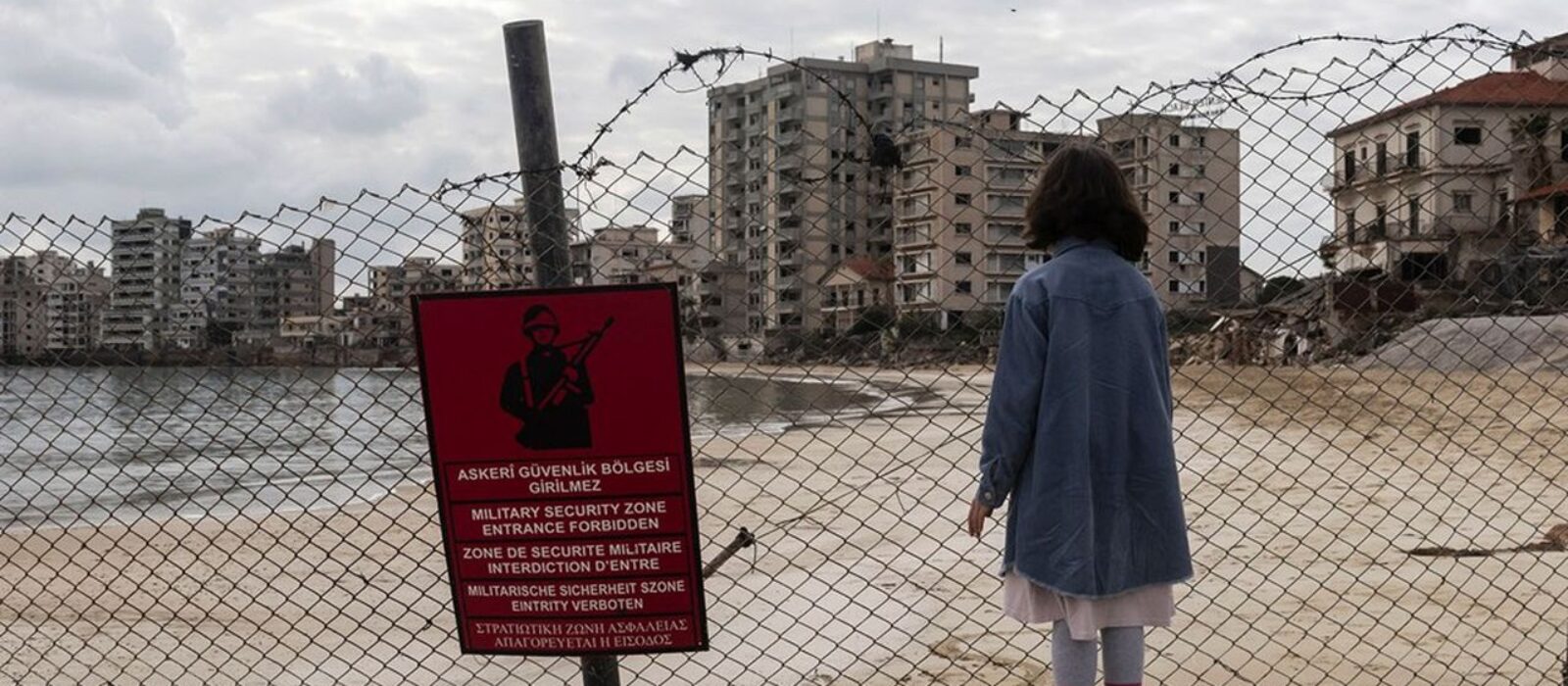
- Partial reopening of Varosha/Maraş: Varosha/Maraş has remained sealed off since 1974, when its Greek Cypriot residents fled the advance of Turkish troops. UN Security Council resolutions declared inadmissible any attempt to resettle any part of Varosha by persons other than the original inhabitants and called for transfer of the area to UN administration. The partial reopening of the beachfront in October 2020, and the subsequent announcement in July 2021 of further reopening, were condemned by the UN Security Council, which called to reverse all steps taken since October 2020. Türkiye rejected this position, and Varosha has remained an ongoing concern in subsequent Council resolutions.
- US lifts arms embargo and Türkiye announces troop reinforcement: In September 2022, the United States lifted its arms embargo on Cyprus, citing compliance with relevant conditions. Türkiye criticized the decision as potentially fuelling an arms race, and announced additional weapons, ammunition and vehicles to support its troops on the island. In March 2026, Türkiye reportedly deployed fighter jets and air defence systems to northern Cyprus in connection with regional Middle East tensions.
- Election of Christodoulides and resumption of informal contacts: Following Christodoulides’ election as the new Greek Cypriot president in February 2023, he met Turkish Cypriot leader Tatar in the UN buffer zone. However, no follow-up meetings were scheduled, and core positions remained unchanged, with the Greek Cypriot side supporting a bizonal federation and the Turkish Cypriot side reiterating its support for sovereign equality and equal international status for the TRNC.
- Appointment of UN Personal Envoy Holguín: In January 2024, María Ángela Holguín Cuéllar was appointed by the UN Secretary General as his Personal Envoy in Cyprus. Tasked with a ‘good offices’ role, she consulted both Cypriot leaders and the guarantor powers to identify common ground and advise the UN Secretary General on next steps. After consultations through mid-2024, she reported insufficient common ground or political will to resume formal negotiations.
- 50th anniversary and Türkiye’s public stance: In July 2024, Erdoğan publicly ruled out a federal solution and framed recognition of two States and the TRNC as the basis for settlement, reinforced by a Turkish parliamentary resolution.
- Informal talks and confidence building measures: A UN-hosted dinner in New York in October 2024 revived contacts between Christodoulides and Tatar around the possible opening of additional crossing points, but Tatar reiterated that recognition was a precondition to any reunification discussions. In March 2025, an informal ‘five-plus’ meeting in Geneva produced agreed confidence-building measures, followed by a meeting in Nicosia inaugurating a new bicommunal youth technical committee, while fundamental divergences remained.
International Armed Conflict
Military occupation of Cyprus by Türkiye
Occupation exists where foreign forces, without the territorial State’s consent, exercise effective control such that territory is placed under the authority of the hostile army. Proxy occupation arises where a State exercises overall control over de facto local authorities that, in turn, exercise effective control over territory. In northern Cyprus, the elements of occupation are met. Turkish forces have maintained a substantial presence, reportedly numbering in the tens of thousands, and their continued deployment has been identified as a central obstacle in settlement efforts. The European Court of Human Rights has recognized Türkiye’s effective overall control over the TRNC, attributing responsibility to Türkiye given the scale of its troop presence and the dependency of the local administration on Turkish military and other support. As a result, Türkiye occupies northern Cyprus through its regular forces and through the TRNC acting as a proxy.
Parties to the Conflict
State Parties
- Cyprus
- Türkiye, including through its proxy (Turkish Republic of Northern Cyprus (TRNC))