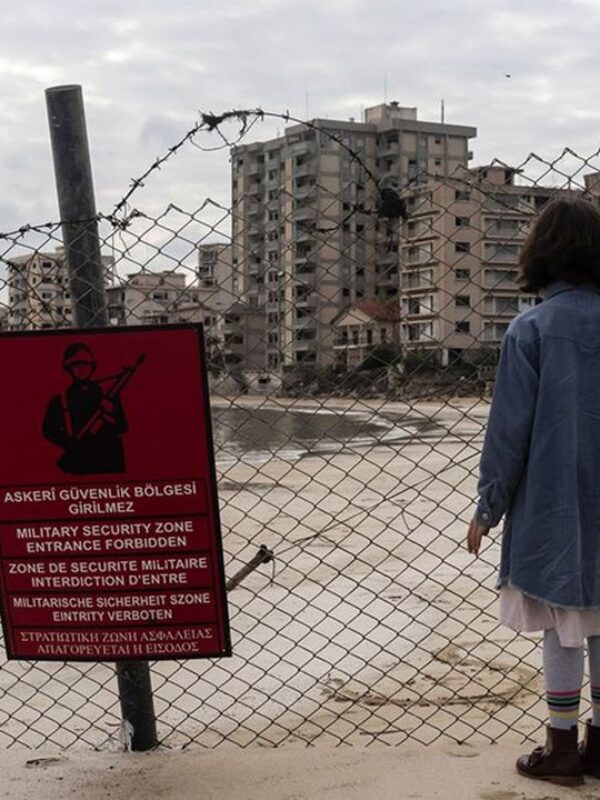
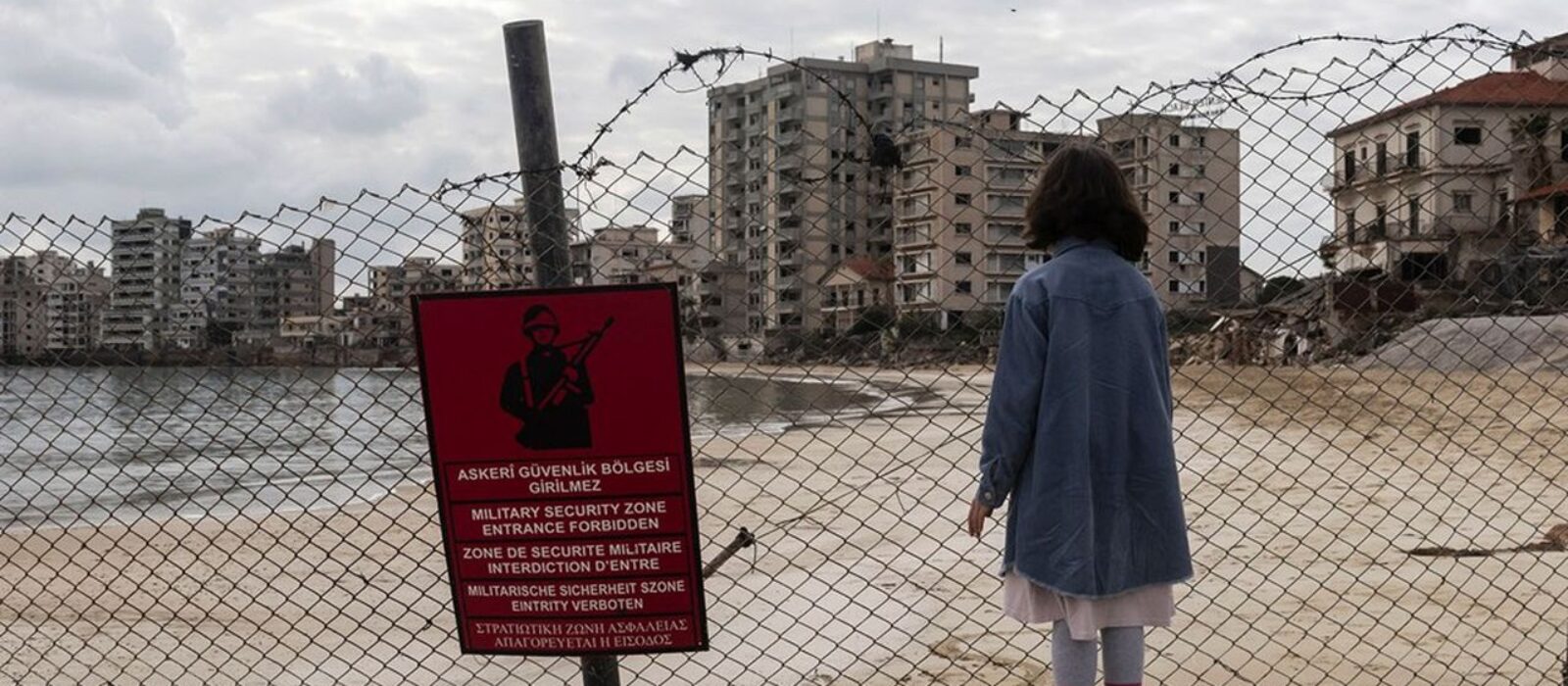
Historical Background
Origins and context
Cyprus’ division stems from late colonial and post-independence intercommunal violence between Greek Cypriots favouring union with Greece and Turkish Cypriots favouring partition and Turkish protection. The 1960 power-sharing constitution collapsed quickly, and the United Nations Peacekeeping Force in Cyprus (UNFICYP) was deployed in 1964. The 1974 Greece-backed coup and Türkiye’s subsequent military intervention led to large-scale killings, disappearances, displacement, sexual violence and the effective partition of the island along the buffer zone called the Green Line.
Partition and international status
Since 1974, Türkiye has maintained troops in northern Cyprus, while the self-proclaimed Turkish Republic of Northern Cyprus (TRNC), created in 1983, remains unrecognised except by Türkiye and is heavily dependent on Ankara. The Republic of Cyprus joined the European Union (EU) in 2004 as a divided island.
Reunification efforts and renewed tensions
Reunification efforts have repeatedly failed, including the 2004 Annan Plan that was put to referenda and rejected by Greek Cypriots and the 2017 Crans-Montana talks, primarily over governance arrangements, security guarantees, territory and the withdrawal of Turkish troops. Since then, hydrocarbons, maritime jurisdiction, militarization, and competing visions of a federation versus a two-State proposal have deepened tensions, while United Nations (UN) efforts and confidence-building proposals have produced limited progress.
Key Developments (2023–2026)
The reporting period saw several major developments:
- Competing visions and stalled dialogue: From 2023, Greek Cypriot and Turkish Cypriot leaders maintained opposing positions on the island’s future, with the Republic of Cyprus supporting a bizonal, bicommunal federation and the Turkish Cypriot leadership insisting on sovereign equality, equal international status and a two-State solution. UN-facilitated contacts continued, but disputes over hydrocarbons and use of land, including in the buffer zone, further widened dissension.
- United Nations initiatives and confidence-building measures: The appointment of María Ángela Holguín Cuéllar as the Personal Envoy of the UN Secretary-General in 2024 revived consultations, but she found insufficient common ground to recommend formal negotiations. Informal meetings in late 2024 and March 2025 produced limited progress, including proposed crossing points, demining, youth, environmental, solar energy and cemetery initiatives. Following the election of Tufan Erhurman as the new leader of the TRNC in October 2025, a shift in position emerged, as he favoured reunification talks and raised renewed hopes for dialogue. Further meetings in 2026 generated cautious optimism without immediate breakthrough.
- Militarization and regional alignments: Security and diplomatic alignments intensified. The Republic of Cyprus deepened cooperation with the United States, France, Greece and Israel, while Türkiye reinforced its support for the Turkish Republic of Northern Cyprus and rejected the federal framework. The 2026 regional crisis prompted new deployments on both sides, and Cyprus’s strengthened defence cooperation with France drew a harsh warning from Türkiye.
International Armed Conflict
Military occupation of Cyprus by Türkiye
Occupation exists where foreign forces, without the territorial State’s consent, exercise effective control such that territory is placed under the authority of the hostile army. Proxy occupation arises where a State exercises overall control over de facto local authorities that, in turn, exercise effective control over territory. In northern Cyprus, these elements are met. Turkish forces remain physically present with substantial military capacity, while the Republic of Cyprus is prevented from exercising authority north of the buffer zone. The TRNC has de facto administered the territory since 1983, but Türkiye exercises effective overall control over it through military, financial and political support. Accordingly, Türkiye continues to occupy northern Cyprus directly and through the TRNC acting as its proxy, notwithstanding the new leader’s support for reunification.
Parties to the Conflict
State Parties
- Cyprus
- Türkiye, including through its proxy (Turkish Republic of Northern Cyprus (TRNC))